Nephrology is a branch of medicine focused on the physiology and disorders of the kidneys. Nephrologists are medical specialists who diagnose, manage, and treat various kidney-related conditions. They also deal with issues related to fluid and electrolyte imbalances in the body.
Kidney disease impacts a significant portion of the global population, with an estimated 850 million people affected worldwide and the number continues to rise alongside chronic conditions such as diabetes mellitus. Therefore, a Fellowship in Nephrology is an ideal choice for healthcare professionals who are interested in this field or who manage kidney patients regularly in their clinical practice.
A fellowship in nephrology after MBBS is intended for physicians who wish to pursue a career in the diagnosis, treatment, and management of kidney related diseases.
| Feature | Details |
|---|---|
| Program Name | Fellowship in Nephrology |
| Program Level | Postgraduate Fellowship |
| Duration | 12 Months |
| Learning Mode | Online live classes + clinical training at a multispecialty hospital |
| Eligibility | MBBS / MD / FNB / DNB / Medical residents / Final-year MBBS students / AYUSH practitioners |
| Curriculum Focus | Renal anatomy and physiology, CKD progression, fluid and electrolyte disorders, acid-base disturbances, glomerular diseases, tubular and interstitial diseases, acute kidney injury (AKI), chronic kidney disease (CKD), systemic renal involvement, dialysis modalities, renal replacement therapy, nephrotoxicity, inherited renal disorders, and renal nutrition. |
| Training Structure | Expert-led online sessions, case-based learning, and hospital-based clinical training |
| Faculty | Experienced nephrologists and physicians with clinical and academic expertise |
| Study Resources | Recorded lectures, case studies, presentations, clinical guidelines, and digital learning modules (SCORM packages) |
| Certification | Fellowship completion certificate with CPD certification |
| Career Opportunities | Multispecialty hospitals, specialty clinics, dialysis centers, transplant units, academic institutions, and research organizations |
| Skill Development | Structured evaluation of renal disorders, interpretation of ABG and electrolyte correction, guideline-based management, immunotherapy decisions, risk stratification, complication prevention, dialysis planning, emergency intervention decisions, drug monitoring, and long-term renal care planning. |
| Industry Relevance | Designed as per current clinical guidelines and healthcare standards |
| Flexibility | Suitable for working medical professionals |
The Fellowship in Nephrology in India offered by MediCOLL Learning equips healthcare professionals with the skills needed to manage conditions such as chronic kidney disease, acute kidney injury, electrolyte imbalances, glomerulonephritis, and dialysis care. This online fellowship in Nephrology curriculum includes a combination of clinical training, didactic lectures to ensure a comprehensive and well-rounded education.
The UK CPD fellowship in nephrology for MBBS doctors is designed to strengthen clinical understanding of kidney diseases across acute and chronic settings. Nephrology is the subspecialty of medicine which requires careful interpretation of laboratory data, structured evaluation of fluid and electrolyte imbalance, and timely management of renal failure. This fellowship supports working doctors in building confidence in managing different kidney diseases, dialysis decisions, and systemic conditions affecting the kidney.
The program is delivered under UK CPD approved online fellowship programs, ensuring defined academic standards and organized learning modules. The curriculum follows a realistic and case-based structure, covering related essential topics such as renal pathology, dialysis principles and nutrition in kidney disease. This approach promotes consistent and professional growth.
As a nephrology online fellowship for working doctors, the course allows clinicians to upgrade knowledge without interrupting clinical responsibilities. The structured format supports continuous learning and strengthens decision-making in complex renal cases. The fellowship also provides credibility and adds value to the clinician’s profile pursuing the fellowship as it is globally recognized.
The fellowship contributes toward International medical fellowship certification through recognized CPD credit points. These credits support professional appraisal, continuing education documentation, and long-term career advancement in nephrology practice. The CPD accredited fellowship supports career advancement and acceptance within the medical field.
Upon completion of the programme learners will be able to:
After the completion of the Fellowship in Nephrology, doctors can pursue a wide range of career avenues. Some of the career opportunities include multispecialty hospitals, specialty clinics, dialysis centers, transplant units. Those interested in academics or research can apply for the job in these institutions. The fellowship lays groundwork for further training or specialization in nephrology.

First hand Clinical Training: Gain hands-on experience under the supervision of an experienced nephrologist in a multi speciality hospital.
Hybrid Learning Options: The program offers adaptable schedules to support working professionals. All learning materials are designed in line with expert input and cover all essential information
Expert Medical Faculty: Sessions are led by medical experts with years of clinical and academic experience.
Global Acknowledgement: Accredited by CPD, ensuring international recognition of the fellowship.
Module 1 – Anatomy & Physiology
Module 2 – Fluid, Electrolyte, Acid-Base Disorder
Module 3- Glomerular Diseases
Module 4 - Infections of Urinary tract and Kidney
Module 5 – Tubular Diseases
Module 6 - Interstitial diseases
Module 7 - Kidney in systemic Diseases
Module 8 - Renal Disease in Pregnant Women
Module 9 - Nephrotoxicity
Module 10 - Renal stone diseases
Module 11 - Inherited Renal Diseases
Module 12 - Nutrition requirements in renal diseases
Module 13 – Dialysis
Module 14 - Clinical Skills and Therapeutics in Nephrology
At MediCOLL Learning, we understand the challenges and support required on the journey towards excellence in a medical career. Our mission is to help you enhance your knowledge, sharpen your skills, and build the confidence needed to thrive in the ever-evolving and competitive medical field.
Here’s why choosing MediCOLL Learning can be your stepping stone to success.

Designation: MBBS, MD, DM (Nephrology), FPN
Dr. Sourabh Gupta, a Gold Medalist, is a Senior Consultant Nephrologist and Kidney Transplant Physician with expertise in both adult and pediatric nephrology. He is an ex-AIIMS Delhi resident and has previously served as a consultant at Max Vaishali. Known for his clinical precision and academic depth, he brings a strong foundation in renal medicine and transplant care. At MediCOLL, he serves as the faculty for Nephrology, guiding students with evidence-based practices and real-world clinical perspectives.
Read MoreThe program spans 1 year, comprising 10 months of online learning followed by 2 months of hands-on clinical training at designated hospitals or healthcare centers.
The program is open to MBBS graduates, MD, DNB, Final year MBBS students, current residents in healthcare and AYUSH doctors with relevant experience in nephrology.
Yes, MediCOLL Learning collaborates with reputed global institutions and healthcare partners such as eIntegrity, CPD, RCP, NHS, and Mangalayatan University to offer this fellowship.
The online phase includes: Live and recorded video lectures Case-based discussions MCQs for evaluation Access to study materials via the Learning Management System (LMS)
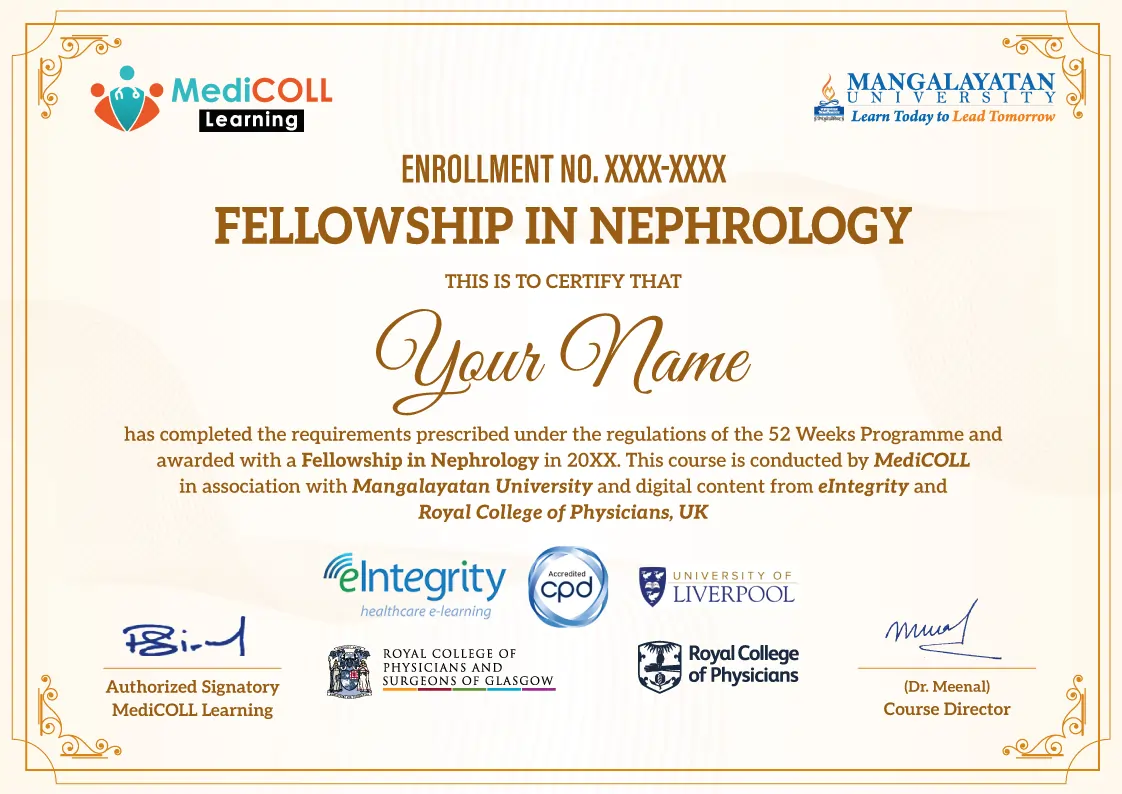
Yes, upon successfully completing both the online coursework and clinical training, you will receive a Fellowship in Nephrology certificate from MediCOLL Learning.
The Nephrology Fellowship program at MediCOLL Learning stands out for its comprehensive curriculum and extensive hands-on clinical experience. The integration of cutting-edge technology and a multidisciplinary approach further enhances the learning experience, preparing fellows for excellence and leadership in the field of nephrology.
Yes, the hybrid format allows working professionals to manage the online component at their convenience, making it ideal for practicing doctors or those preparing for postgraduate exams.
Yes, international medical graduates (IMGs) are welcome to apply, provided they meet the eligibility criteria and demonstrate proficiency in English.
Learners receive: Guidance from academic mentors Doubt-clearing sessions Technical support for the learning platform
Upon completion of the Fellowship in Nephrology, graduates are well-positioned for a variety of career paths in both clinical and academic settings. Opportunities include roles as nephrology consultants, dialysis center specialists, transplant coordinators, clinical researchers, and educators. The program equips fellows with the skills and experience needed to excel in hospitals, specialty clinics, and research institutions, both in India and internationally.
Medical professionals who have completed their graduation like MBBS or post graduation are eligible to pursue an Online Fellowship in Nephrology. AYUSH doctors who have interest and have prior relevant experience can also apply for this fellowship. Furthermore, present medical residents who are working in hospitals and wish to pursue additional educational programs can also join it.
A fellowship in nephrology is an advanced medical training program that focuses on the diagnosis and management of kidney-related diseases. Fellowships by MediColl are designed by medical experts focusing on practical learning aligned with real-world settings. It helps to develop clinical understanding of various kidney conditions as well as an opportunity to upskill and promote career growth.
The Fellowship in Nephrology in India provided by MediColl is of 12 months. It consists of 10 months of online live classes by an expert nephrologist followed by 2 months of clinical training under the mentorship of an experienced nephrologist in a multi-speciality hospital. The classes are case based and focus is on the practical application of the topics.
The highest degree in nephrology is typically a super-specialty qualification, such as DM or its equivalent, pursued after post-graduation in internal medicine. Many medical professionals complete their graduation and, while preparing for a super-specialty degree, enroll in 1 year Fellowship in Nephrology to stay updated and gain clinical exposure. This helps them build foundational experience before starting formal specialty training.
Yes, you can pursue a Fellowship in Nephrology after Pharm D graduation. The fellowship provides knowledge about medication therapy, managing dialysis, and immunosuppression in transplant patients while working alongside multidisciplinary medical teams.
© Copyrights Medicoll All rights reserved.