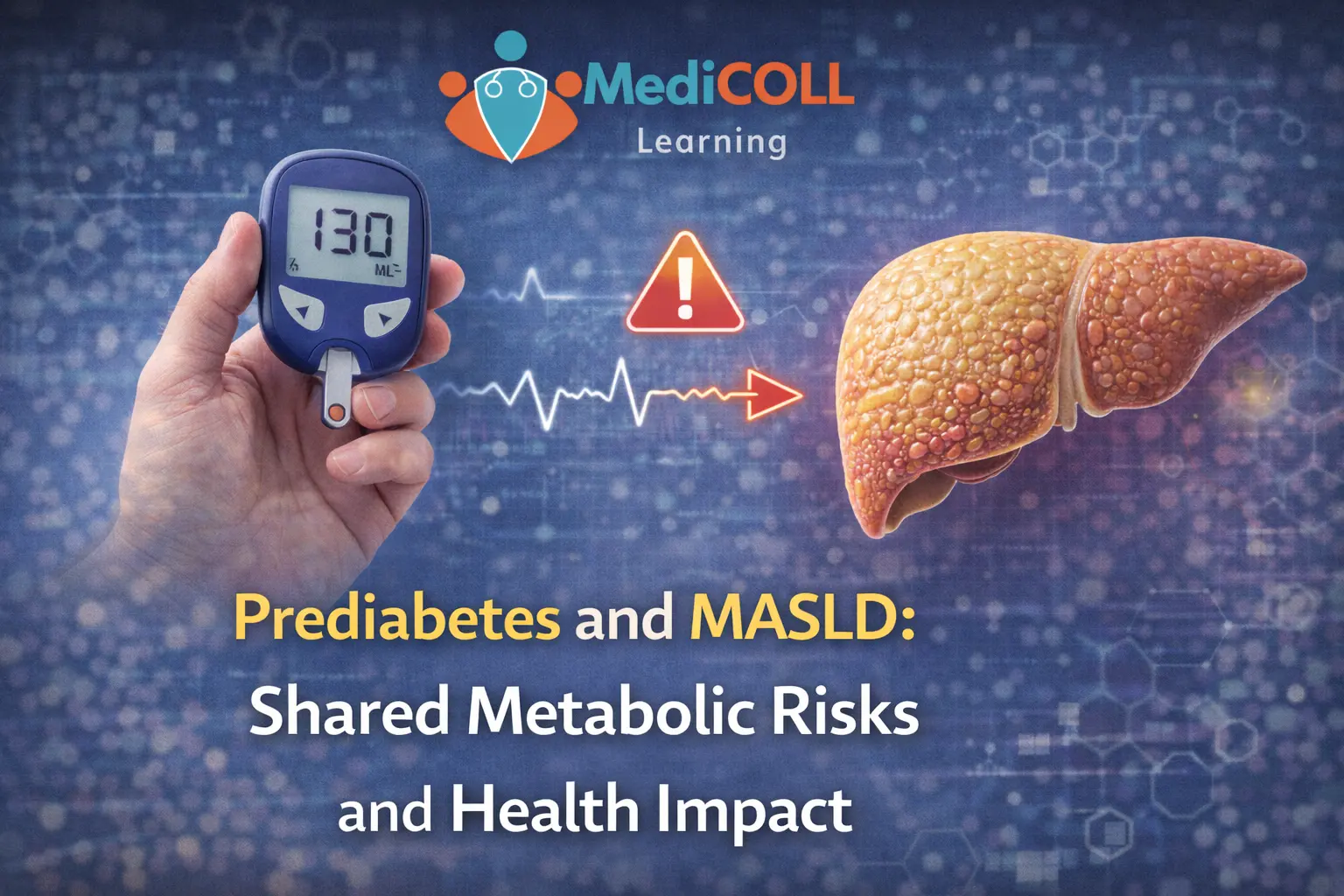
The increasing incidence of metabolic disorders shows that prediabetes and MASLD (Metabolic Dysfunction–Associated Liver Disease) exist under a strong relationship. The two conditions serve as distinct manifestations of a shared metabolic disorder. The global rise in obesity combined with increased sedentary behavior has led to more people developing multiple metabolic disorders which results in increased risk of permanent liver damage and heart problems.
The established links between prediabetes and fatty liver disease are well documented. MASLD, which medical authorities formerly called non-alcoholic fatty liver disease (NAFLD), defines a condition where fat builds up in the liver because a person has cardiometabolic risk factors.
The condition of prediabetes results in higher blood sugar levels and insulin resistance for individuals which leads to increased hepatic fat accumulation. People who have impaired fasting glucose or impaired glucose tolerance show a higher risk of developing prediabetes liver disease than people who have normal metabolic function.
The development of MASLD to its advanced stage starts with silent symptoms which make it essential to identify the condition in its early stages.
Insulin resistance and MASLD disease form the main connection between these two medical conditions because insulin resistance causes disruptions in glucose metabolism. The condition results in two main effects which include increased liver glucose production and excessive fat storage in hepatic cells and the start of inflammatory processes.
The metabolic dysfunction–associated liver disease shows how systemic insulin resistance affects liver function in people who progress from prediabetes to diabetes and develop fibrosis and cardiometabolic problems as time progresses.
Prediabetes and MASLD develop together because multiple cardiometabolic risk factors which include central obesity, sedentary behaviour, dyslipidemia, hypertension, and processed diets. The relationship between obesity, insulin resistance, and liver disease development stands as a key connection because extra fat tissue creates inflammation which results in worsened insulin resistance and faster liver fat buildup.
Below is a summary of shared risk factors:
| Shared Risk Factor | Impact on Prediabetes | Impact on MASLD |
|---|---|---|
| Obesity | Increases insulin resistance | Promotes hepatic fat deposition |
| Sedentary lifestyle | Impairs glucose metabolism | Reduces fat oxidation in liver |
| Dyslipidemia | Elevates triglycerides | Contributes to liver fat buildup |
| Hypertension | Linked to metabolic syndrome | Associated with liver fibrosis progression |
| Poor diet | Raises blood sugar | Encourages fatty infiltration |
This overlap of metabolic disorders highlights the need for integrated management strategies.
Screening for MASLD is recommended or highly recommended by the medical community for prediabetic patients at high risk of the disease because there are no symptoms in this condition.The assessment process for diagnosis includes testing liver enzymes through ALT and AST methods as well as conducting ultrasound imaging and estimating fibrosis risk through established scoring systems, and performing metabolic evaluations.
Doctors should begin assessment of patients who show both obesity or metabolic syndrome together with signs of liver disease. The relationship between metabolic well-being and liver disease results allows for prompt medical treatment which halts disease progress to fibrosis or cirrhosis.
The treatment of prediabetes and MASLD requires patients to follow lifestyle changes because research shows that weight loss of 5 to 10 percent enhances insulin sensitivity while reducing liver fat. A metabolic stable diet needs to have controlled calories and balanced nutrition which includes high fiber content and low refined sugar content.
The combination of aerobic exercise with resistance training helps to improve insulin signaling while reducing liver fat build-up. The simultaneous treatment of metabolic syndrome and liver disease results in better long-term health outcomes.
Weight management programs that follow a specific structure together with behavioral counseling create a successful system that stops prediabetes from developing into diabetes while they maintain metabolic health and support liver recovery.
Currently, no single medication is universally approved specifically for MASLD; however, certain therapies used in prediabetes and diabetes may provide liver benefits.
The agents work to combat insulin resistance while treating cardiometabolic risk factors, which results in better liver function outcomes. Pharmacological treatment must serve as a supplementary treatment that works together with lifestyle changes.
The process of clinical decision-making needs to consider three factors which include total metabolic risk assessment, liver fibrosis progression and patient glycemic control methods.
The close link between prediabetes and MASLD demonstrates how insulin resistance causes a variety of metabolic dysfunction-based liver diseases. The combination of obesity and metabolic syndrome creates common risk factors which lead to ongoing liver and heart health issues. The process requires both initial testing and modifications to daily activities.
MediColl Learning platform helps doctors understand overlap of metabolic disorders connections which leads to better treatment choices and better metabolic health and liver outcomes health results through preventative medical care.
MASLD stands for metabolic associated fatty liver disease that is primarily defined by an accumulation of fat in the liver associated with metabolic risk factors.
In accordance with the concept of insulin, prediabetes promotes hepatic fat retention, leading to a drastic reference on the comorbid conditions of the liver.
Yes, disease worsening is a probability that traces back to the pre-diabetic stage. It can even appear before any full diagnosis of diabetes can be truly in place.
Performed in people with high risk, obesity, or high metabolic syndrome, MASLD screening can be well applied even in prediabetes.
Weight loss, dietary modifications, and exercise routines lead to three benefits which include better insulin resistance and reduced liver fat and improved liver function.
© Copyrights Medicoll All rights reserved.