A fellowship program is a structured, specialised training or educational opportunity designed for professionals, typically offered after completing initial academic training in a particular field. Fellowship programs offer individuals the opportunity to acquire advanced knowledge, skills, and practical experience in a specific area of study or practice.
Pursuing fellowship courses after completing MBBS in India is an excellent way to specialise in a particular field of medicine, with high demanded fellowships after MBBS offering advanced training and expertise in specific areas. These programs enable medical professionals to hone their skills and knowledge in their chosen specialisation
Completing a Bachelor of Medicine, Bachelor of Surgery (MBBS) is a significant milestone, but for many medical professionals, the journey does not end there. Post-MBBS fellowships offer a significant avenue for specialisation, allowing medical professionals to deepen their knowledge and expertise in specific medical fields. In India, several fellowship courses in India are available, catering to various specialities, and the following sections explore the top 10 options
After MBBS, most doctors reach a point where they want to go deeper into a specific area of medicine. The traditional path is passing National Eligibility cum Entrance Test (Postgraduate) also known as NEET- PG, then pursuing a postgraduate degree. But this means a significant investment of both time and funds.
However, a fellowship after MBBS is a focused alternative for doctors who want specialised training without spending another few years in a postgraduate program. A fellowship narrows down to one specific field, whether that is nephrology or emergency medicine. It builds clinical competence in less time than a traditional post graduate program.
Recognition, clinical exposure, course structure, and career relevance all need to be considered for choosing a fellowship.
Doctors looking for MCI recognised fellowship courses in India should note that the Medical Council of India was succeeded by the National Medical Commission in 2020. Fellowship programs duration can vary from 1 year to 3 years depending on the specialisation and institution. Some programs have a fixed timeline while others are structured in modules which give doctors the option to pace their learning around their professional commitments.
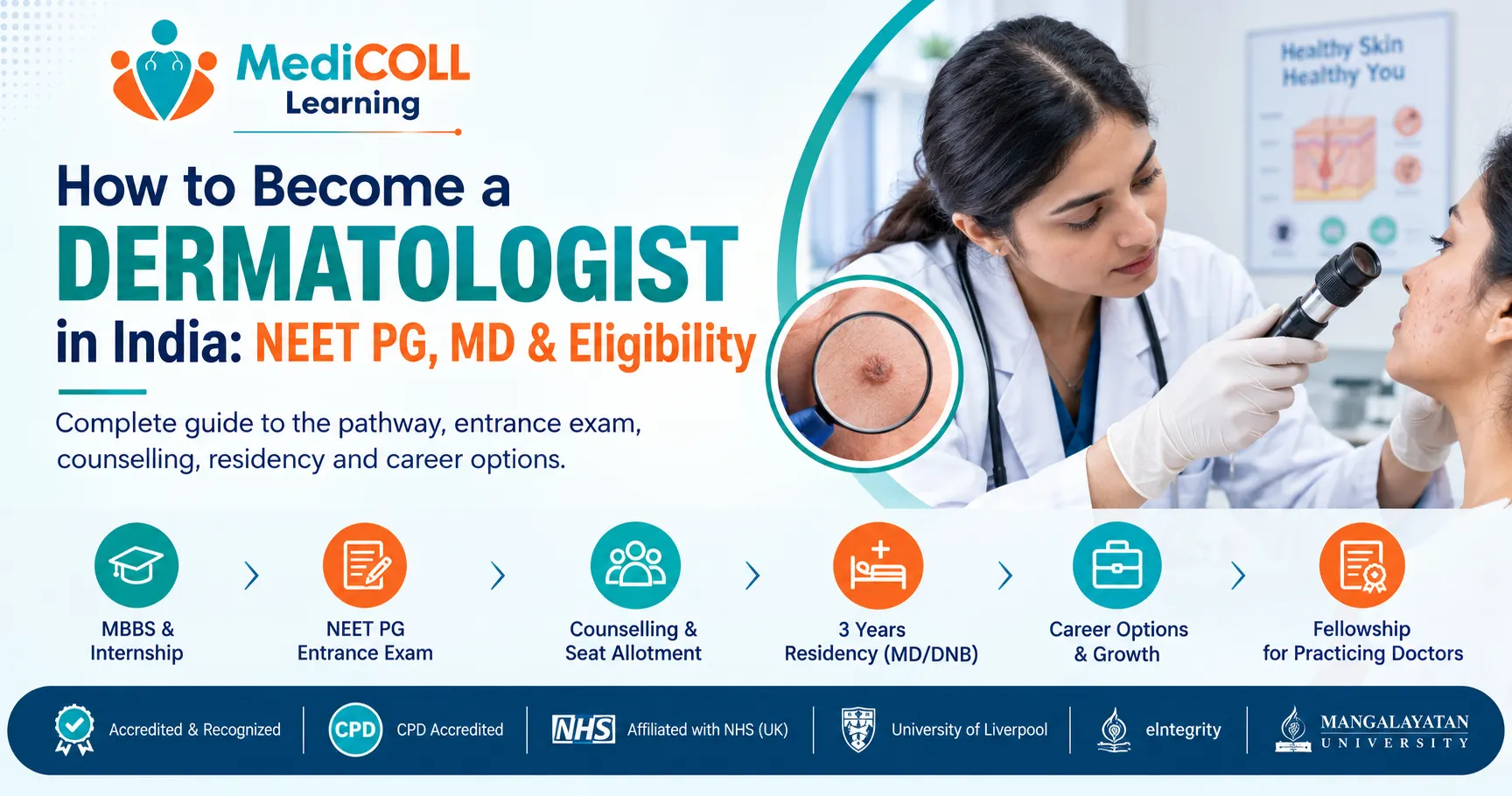
NMC fellowship courses represent the current standard for formally recognised medical training in the country. Checking whether a program aligns with NMC guidelines is an essential first step before enrolling into the program. Some programs also hold accreditation from international bodies and universities such as the Continuing Professional Development (CPD) and University of Liverpool. These credentials reflect the quality of the program and the education standard it holds. Certain hospital-based fellowships carry strong industry recognition even without formal government accreditation.
MBBS graduates, Post graduates like MD, MS, DNB, and FNB holders are also eligible for fellowship programs. Furthermore, AYUSH practitioners and doctors in residency can also apply for the fellowship programs. Eligibility of the fellowship programs may vary across specialisations so reviewing the specific requirements of each program is always a crucial step before applying for any medical course.

Medical training programs today are offered in three formats.
NEET PG preparation takes time and additionally seats are limited too. MD or MS is a long term commitment before a doctor can begin practising as a specialist. Doctors who are already in practice, a three year commitment is simply not viable.
A fellowship offers a shorter duration with focused specialized training in a field of medicine. In addition, the hybrid format of the fellowship allows doctors to continue their practice while completing their academic training
India has a significant and growing need for trained specialists, which has led to a rise in high demanded fellowships after MBBS in areas such as diabetes care, cardiac medicine and critical care.
Doctors with fellowship training can bring specific clinical skills across hospitals or clinics and help meet the increasing demand for trained specialists. A fellowship is a more practical route for doctors who have a clear clinical interest but cannot commit to the time a full PG program demands.
A fellowship is not just a financial investment but also an investment in the future. It forms the foundation for further specialisation and gives a medical career a meaningful direction.
After MBBS, many doctors prefer fellowship courses to gain practical clinical expertise and build a stronger medical career. MCI recognised fellowship courses after MBBS have become a popular choice because they help doctors specialize in focused medical fields without spending several years in traditional postgraduate programs.
Since the Medical Council of India (MCI) has now been replaced by the National Medical Commission (NMC), most recognized fellowship programs are offered through reputed universities, hospitals, and accredited medical institutions. These courses mainly focus on hands-on training, real patient management, and industry-relevant clinical skills, making them highly useful for working doctors and fresh MBBS graduates looking to advance their careers.
Below is the comprehensive list of the top 10 MCI fellowship courses after mbbs in India.
Fellowship in Clinical Cardiology: Cardiology remains a highly sought-after specialisation. Aspiring cardiologists can opt for this fellowship to specialise in the diagnosis and treatment of heart-related conditions, and to develop an understanding of cardiovascular diseases, diagnostics, and interventions, preparing them to become expert cardiologists.
Fellowship in Paediatrics: This fellowship provides advanced, in-depth training in various sub-specialities within the field of paediatrics. It allows medical professionals to focus on a specific area of pediatric medicine, honing their skills and expertise to become specialists in this particular domain.
Fellowship in Diabetes Mellitus: This fellowship enables healthcare professionals, including physicians, endocrinologists, and diabetologists, to enhance their expertise, stay current with best practices, and contribute to improving diabetes care for individuals and communities.
Fellowship in Nephrology: Nephrology is the study of kidney-related disorders. A fellowship in this field equips doctors with the skills to manage kidney diseases, including dialysis and kidney transplantation.
Fellowship in 2D Echocardiography: It is a specialised training program designed for medical professionals such as cardiologists who are seeking to acquire advanced echocardiographic skills. This fellowship provides in-depth knowledge and hands-on training in interpreting echocardiographic studies, enabling the participants to become experts in cardiac imaging.
Fellowship in Critical Care Medicine: Critical care is a crucial aspect of medicine that focuses on patients with life-threatening conditions. This fellowship equips medical professionals with the expertise to handle emergencies, intensive care, and advanced life support.
Fellowship in Family Medicine: Family medicine is a comprehensive medical speciality that focuses on providing primary care across all ages, genders, and organ systems. A fellowship in family medicine enables medical professionals to deepen their knowledge, sharpen their skills, and specialise in areas of interest within the field.
Fellowship in Internal Medicine: Internal Medicine is a broad discipline that covers the prevention, diagnosis, and management of various adult diseases. This makes the fellowships an opportunity for medical professionals to get deeper insights into a particular subspecialty, such as Cardiology, Gastroenterology, Pulmonology, Rheumatology, Nephrology, Infectious Diseases, Haematology-Oncology, and more.
Fellowship in Obstetrics and Gynaecology: This fellowship provides advanced education and clinical training in specific sub-specialities within the broad field of women's health. Obstetrics and Gynaecology fellowships allow medical professionals to gain expertise, focus on specific aspects of women's healthcare, and contribute to advancements in the field.
Fellowship in Emergency Medicine: Fellowship in Emergency Medicine is an advanced training program designed to equip medical professionals with specialised skills and expertise in managing acute and critical medical conditions. Emergency medicine involves the immediate assessment, stabilisation, and treatment of patients across all ages who require urgent medical care due to injuries, illnesses, or life-threatening conditions.
MediCOLL Learning is an organisation providing various online fellowship program for medical professionals, and helps to enhance their knowledge and skills in their chosen field.
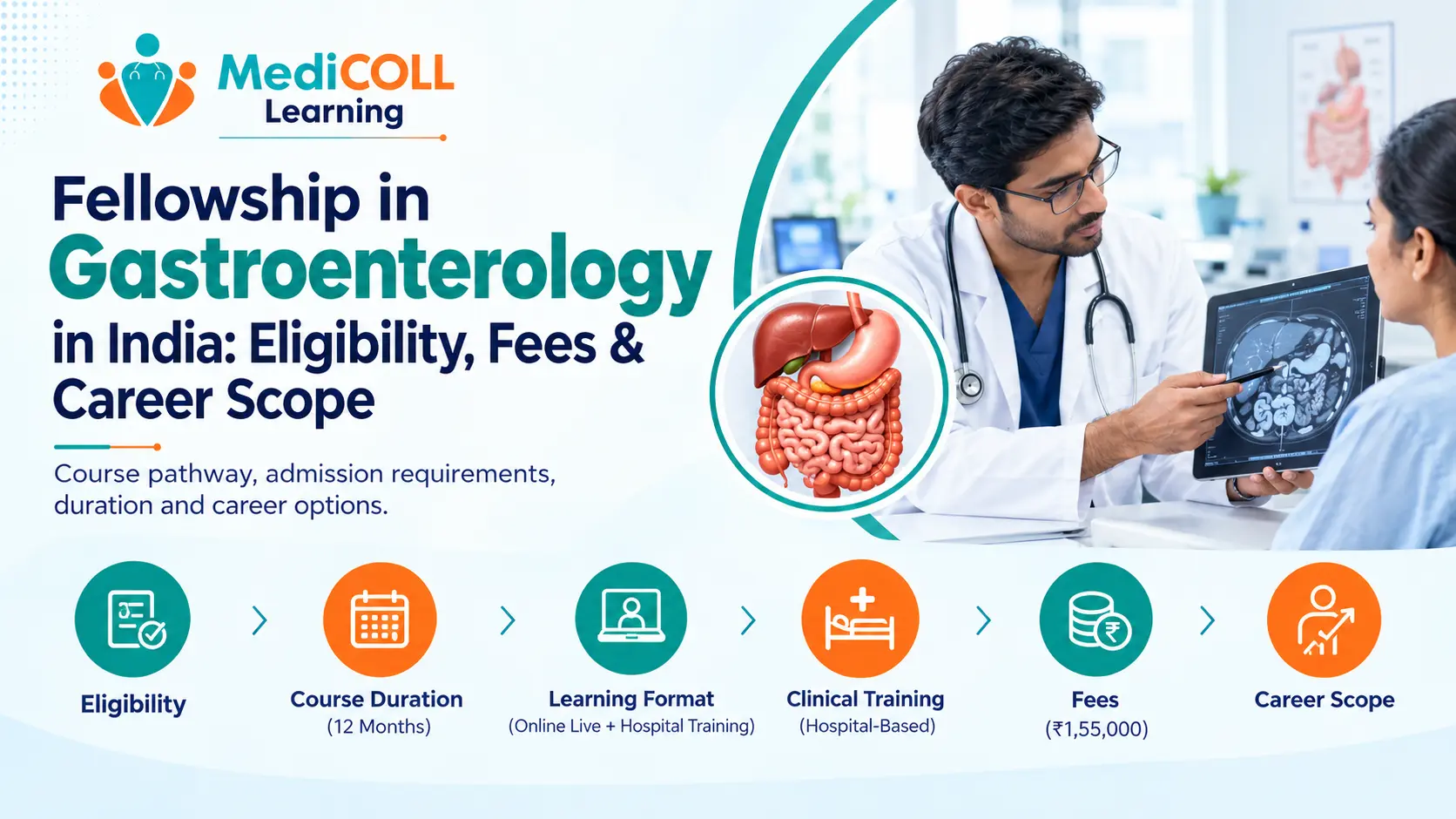
The fellowship follows a hybrid format of online virtual classes followed by hands-on clinical training in a super-speciality hospital under the guidance of experienced physicians. The online format provides flexibility and accessibility to medical professionals to continue their learning journey at their own pace and convenience.
The duration of the fellowship is 12 months, including 10 months of online learning through the Learning Management System (LMS) and 8 weeks of clinical training in a leading hospital. The classes are led by medical experts and are interactive, case-based, and all accessible through an easy-to-use interface. Help sessions are also scheduled for resolving doubts of participants pursuing the fellowship.
Fellowship is an ideal pathway for medical professionals to become highly skilled and specialised practitioners dedicated to providing the best possible patient care. Embarking on a fellowship after MBBS not only enhances clinical skills but also opens up exciting opportunities for specialisation.
The above-discussed fellowship courses span a broad range of medical fields, enabling medical professionals to make significant contributions to healthcare. Aspiring physicians can explore these options based on their interests and career goals. Continuous learning and specialisation not only benefit individual practitioners but also contribute to the overall improvement of healthcare services in India.
These fellowship courses pave the way for a rewarding and impactful medical career, whether it is in the critical care unit, pediatric ward, or specialised clinics.
Most fellowship programs are open to all medical professionals. MBBS graduates, Post graduates like MD/MS, or DNB/FNB holders, AYUSH practitioners and current medical residents can apply for the fellowship. Eligibility can differ across specialisation so one should check requirements before enrolling.
Several fellowship courses today are offered online or through a hybrid model in India. These fellowships combine digital learning with clinical exposure making it accessible to medical professionals in different demographics.
Clinical training involves working with experienced specialists and gaining exposure to patient cases in a real world setting. The clinical training helps in applying knowledge gained during the classes to patient management.
Presently many medical training programs are designed keeping in mind the hectic schedules of working professionals. The online or hybrid format allows doctors to continue their upskill without stepping away from clinical practice.
Fellowship significantly strengthens a clinical profile and opens diverse career doors for doctors.
They can work as specialists in multispeciality hospitals, set up their own clinics in their area of specialisation. Additionally, doctors can pursue academic and teaching roles if interested.
MCI recognised fellowship courses after MBBS are specialized medical training programs that help doctors gain practical clinical skills in specific healthcare fields. These courses are offered by reputed universities, hospitals, and accredited medical institutions under NMC guidelines.
© Copyrights Medicoll All rights reserved.