Thyroid disorders are among the most common endocrine diseases globally and affecting a significant portion of the world population. Approximately 200 million people worldwide have some form of thyroid disease out of which almost 60 percent of people are unaware of it because either it is not medically identified or still undiagnosed.
Therefore, identifying the contributing factors is essential, as thyroid disorders often do not present clearly and the symptoms resemble those of other health conditions. Following sections discuss the function of the thyroid gland, early signs of thyroid problems, and the challenges involved in thyroid diagnosis and treatment.
· About Thyroid Diagnosed
· A Small Gland That Affects The Entire Body
· Autoimmune Thyroid Disease: The Often Overlooked Early Stage
· Commonly Missed Thyroid Symptoms
· The Role of Endocrinologists in Thyroid Disorder Diagnosis
· Why Choose Associated Endocrinologists
· Why do test numbers don’t always tell the full thyroid story?
· Why can thyroid tests be wrong?
· Why are thyroid issues hard to diagnose?
· Why are thyroid issues so common?
Thyroid disorders are diagnosed through an amalgamation of Clinical Evaluation and thyroid diagnosis test such as:
· Blood Testing such as thyroid stimulating hormone (TSH), T4, T3, and thyroid antibody test.
· Imaging like Thyroid Ultrasound and Radioactive Iodine Uptake (RAIU) Scan
· Tissue Sample (Biopsy)- Fine-needle aspiration (FNA) biopsy may be performed to examine inflammation or malignant changes in the thyroid tissue
In clinical practice, diagnosis often relies heavily on serum TSH levels, with free thyroxine (FT4) and triiodothyronine (FT3) used as confirmatory tests.
· TSH (Thyroid Stimulating Hormone): 0.4 – 5.0 mIU/L
· Free T4 (Thyroxine): 0.8 – 1.8 ng/dL or 0.7 – 1.9 ng/dL
· Total T3 (Triiodothyronine): 80 – 180 ng/dL or 70 – 200 ng/dL
However, at times thyroid disease evolves gradually, and biochemical abnormalities may lag behind symptom onset. This delay can result in patients being symptomatic for months or even years before receiving a formal diagnosis.
Additionally, thyroid disorders often present with other symptoms, which may be linked to stress, lifestyle factors, mental health conditions, or aging, further complicating the early diagnosis.
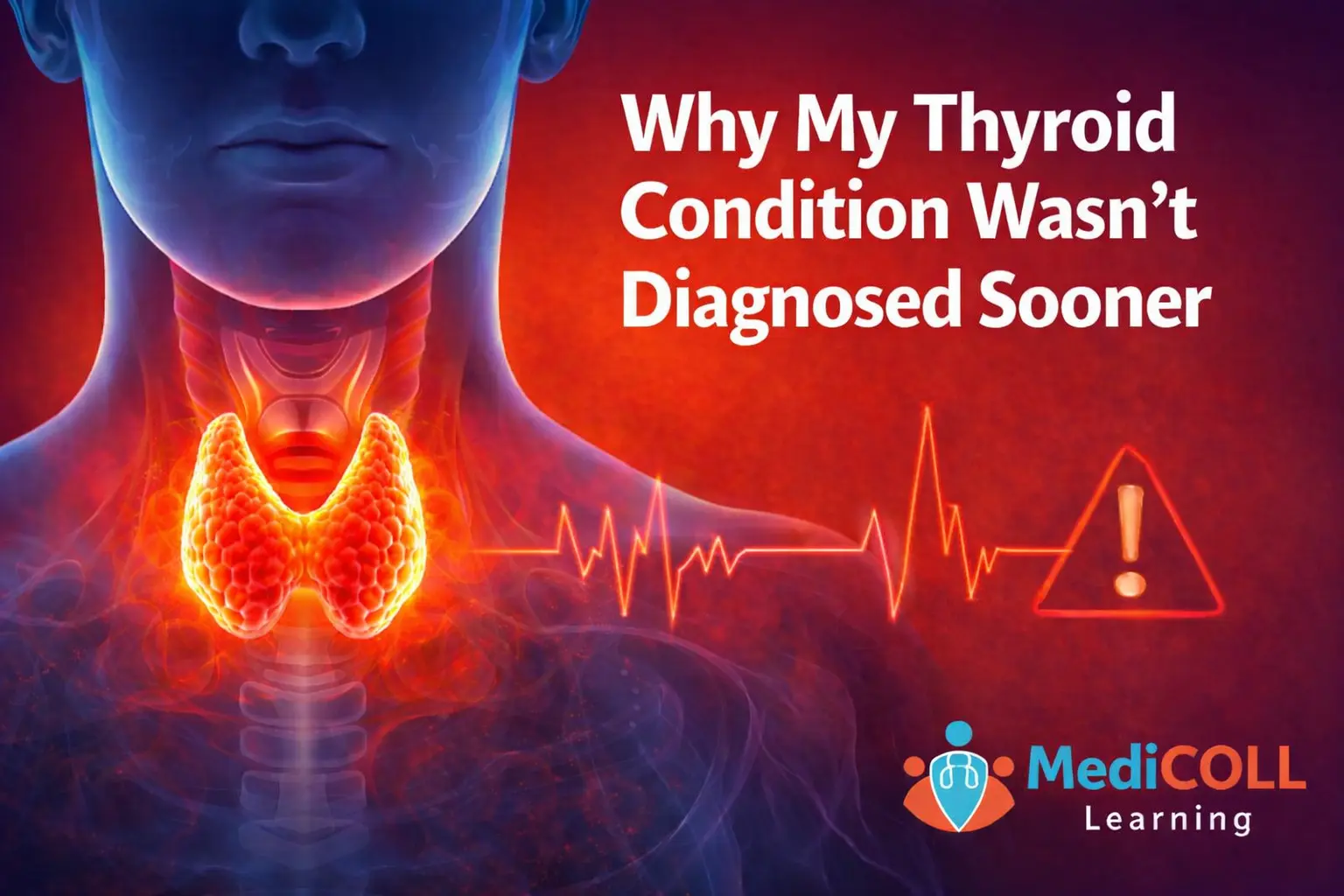
Thyroid Gland is a tiny butterfly shaped hormone producing organ located in front of the neck under the voice box. Thyroid gland function is to control the amount of energy our body needs including the heart. It has effects such as:
· Body temperature increases
· Growth is promoted in children
· Heart beat and the pulse becomes stronger
· Food is consumed quickly in the body
The hormones produced by thyroid gland are:
· Triiodothyronine (T3)
· Tetraiodothyronine (T4), also called thyroxine
Autoimmune thyroid diseases such as Hashimoto thyroiditis and Graves disease frequently begin with an immunological phase before hormonal dysfunction appears clearly. During this phase, patients may have:
· Normal TSH and FT4 levels
· Positive thyroid antibodies (anti-TPO, anti-TG, or TSH receptor antibodies)
· Fluctuating or episodic symptoms
This early stage is often missed because routine screening does not always include antibody testing, and symptoms may be intermittent. By the time hormonal abnormalities are detected, significant thyroid tissue damage may already have occurred.
Thyroid gland symptoms exhibited by the body depend upon if the thyroid hormone is producing in excess (Hyperthyroidism) or insufficient (Hypothyroidism).
Some of the early signs of thyroid problems are:
· Persistent Fatigue
· Unexplained Weight Changes
· Mood Shifts (Depression Or Anxiety)
· Skin/Hair Issues (Dryness, Thinning)
· Temperature Sensitivity
· Digestive Changes (Constipation/Diarrhea)
· Menstrual Irregularities
· Affecting Energy, Metabolism, And Overall Well-Being
Other Subtle thyroid gland symptoms can be:
· Hoarse voice or a swelling in neck
· Skin darkening around the neck or itchy scalp
· Blurry or double vision, or irritated eyes
· Joint pain, stiffness, or muscle weakness
Endocrinologists play a significant role in diagnosing thyroid disorders. Endocrinologists are specialized physicians who diagnose and treat hormone-related disorders such as diabetes, thyroid diseases. The endocrinologists not only interpret the laboratory results, they also assess:
· Symptom patterns over time
· Autoimmune markers
· Medication interference
· Pituitary–thyroid axis integrity
They are well-trained to recognize different forms of thyroid illness that may be missed in primary care settings.
Choosing a thyroid specialist (endocrinologists) can be beneficial for a number of reasons:
· Comprehensive thyroid panels including antibodies
· Long term monitoring rather than one-time testing
· Individualized interpretation of the results rather than rigid cut-off values
· Experience with various clinical cases
This approach helps bridge the gap of undiagnosed symptoms, especially in patients with fluctuating or borderline results.
Laboratory reference ranges are derived from broad population averages, not optimal individual ranges. A TSH value within the “normal” range may still be inappropriate for a specific patient, especially if:
· Have autoimmune thyroid disease or pituitary dysfunction
· Pregnant or postpartum
· Time of the day as the TSH level fluctuates specially high at night
· Conversion or utilisation problem such as thyroid hormone resistance
Symptoms often correlate poorly with isolated biochemical values, especially in early disease.
Thyroid tests can be misleading due to several factors:
· Diurnal variation in TSH secretion
· Acute illness or stress affecting hormone levels
· Interference from biotin supplements or medications
· Changes in thyroid-binding proteins
· Pituitary Issues
Thyroid disorders are challenging to diagnose because:
· Progress gradually over time
· Present with symptoms that mimics other health issues
· Are influenced by factors such as stress, pregnancy, and immune status
This requires clinical suspicion and repeated assessment rather than reliance on one time test or one visit to the thyroid specialist.
The increasing number of thyroid disorders is due to:
· Increased autoimmune disease burden
· Women are more susceptible to thyroid problems than men
· Iodine intake variability
· Improved detection and awareness
· Genetic susceptibility combined with lifestyle stressors
Hence, anyone suspecting a thyroid disorder should consult a thyroid specialist, who can provide accurate guidance throughout the course of management.
© Copyrights Medicoll All rights reserved.