| Blog Summary |
|---|
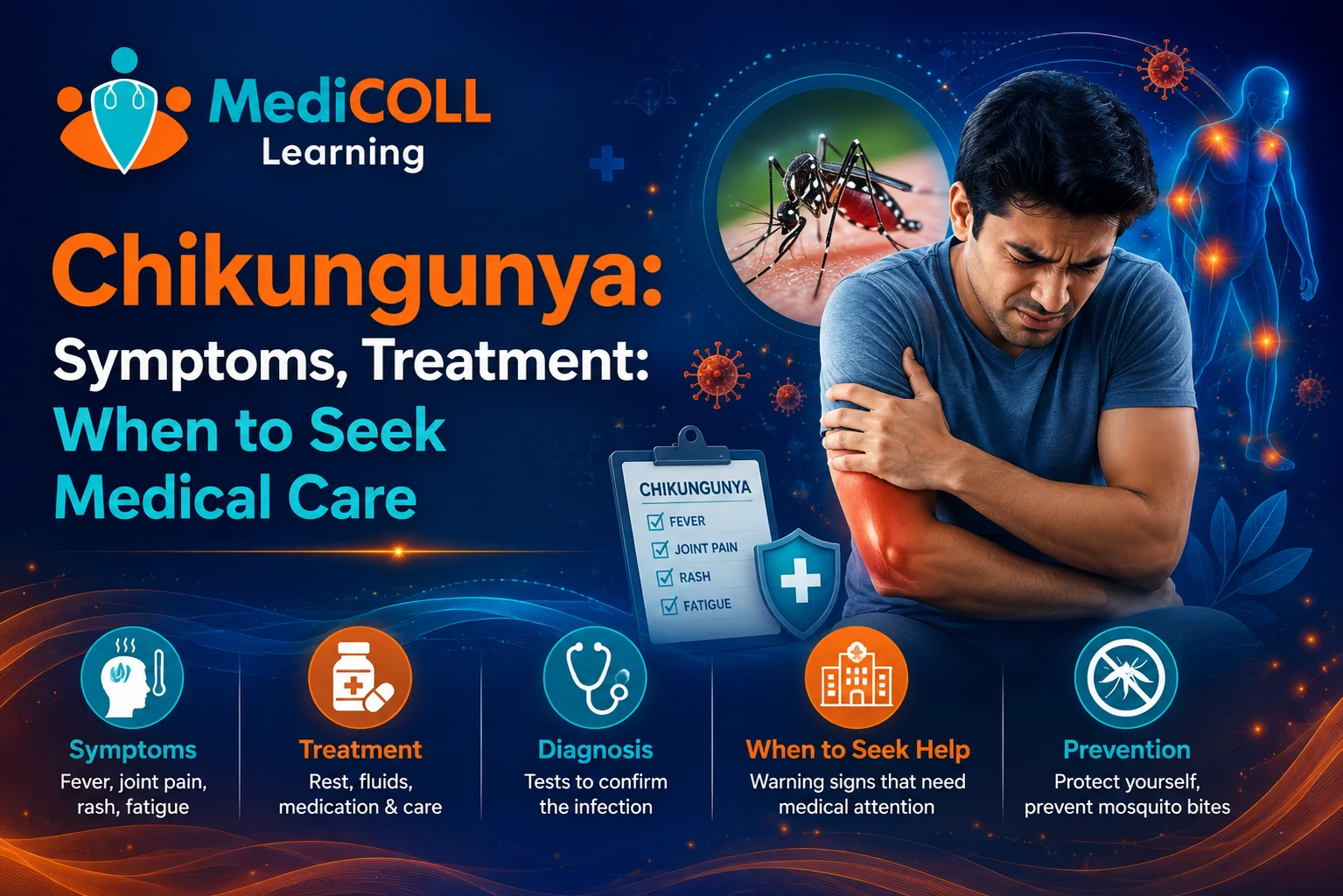
| Chikungunya is not a new disease and it keeps resurfacing in seasonal waves, especially during and after the monsoon, when mosquito breeding picks up. Since the chikungunya symptoms such as fever pattern looks similar, a lot of people confuse it with dengue early on. The joint involvement is really what sets it apart. This blog breaks down the symptoms, what treatment actually looks like, and at which point it is important to visit a doctor for the consultation. |
Chikungunya is a viral illness spread by infected Aedes mosquitoes, and its biggest calling card is the chikungunya joint pain that follows the fever. Most people start feeling unwell within a week of the bite, and while the fever tends to settle in a few days, the joint pain can stick around much longer than expected.
The name itself comes from a word in Kimakonde language which describes the stooped, bent-over walk patients often develop because the joint pain is so severe. There is no specific antiviral drug for it yet, so care is mostly about managing symptoms and giving the body time to recover completely.
Chikungunya is caused by the chikungunya virus, spread to people through the bite of an infected Aedes aegypti or Aedes albopictus mosquito which are the same mosquitoes responsible for dengue. Once a mosquito picks up the virus from an infected person, it can pass it on to the next person it bites.
Understanding of the causes of Chikungunya symptoms imperative because prevention almost entirely comes down to controlling mosquito breeding, not the virus itself. The illness isn't spread person to person through casual contact, and once someone recovers, they generally develop lasting immunity
Sudden high fever, often above 102°F with sharp joint pain and chills are firstly noticed. Chikungunya fever symptoms tend to appear anywhere from three to seven days after the mosquito bite, though it can stretch a bit longer in some cases.
The fever pattern is somewhat deceptive as it can settle for anywhere between four and ten days then spike again for a day or two afterward which is known as a saddle-back fever. Along with the fever, patients commonly report headache, muscle aches, fatigue, nausea, and a skin rash that shows up a couple of days into the illness.
Some people also notice mild swelling around the joints. Some infections stay mild, and a portion of people don't develop noticeable symptoms at all, which is part of why chikungunya often gets missed or mistaken for something else in the first few days.
Severe joint pain is the hallmark of the disease. Chikungunya joint pain tends to be intense, often described by patients as far worse than an ordinary flu-related ache. It usually affects the smaller joints first such as wrists, ankles, fingers and tends to be symmetrical, showing up on both sides of the body.
Morning stiffness is common, and simple movements like gripping a cup or climbing stairs can become genuinely difficult during a flare. This settles within a couple of weeks for most people. However for some, it might linger far longer even for months, occasionally for years, particularly in older adults or those with pre-existing joint issues.
This is one of the more common questions patients ask, and the honest answer depends on the phase. Chikungunya has 3 phases, namely acute, post-acute and chronic phases.
The acute phase, with fever and the worst of the joint pain, generally runs about one to two weeks. After that, some patients move into what's sometimes called a post-acute phase, where joint discomfort comes and goes for a few more weeks. A smaller group goes on to develop chronic joint symptoms which can go beyond three months, sometimes years which is called chronic phase.
This happens more often in people over 40 and in women, though the reasons for that pattern aren't fully settled. Some patients may find fatigue catching them off guard weeks after they thought they'd recovered.
Read Also : Telemedicine vs Traditional Healthcare: Key Differences Explained
It is crucial to distinguish whether the person is suffering from chikungunya, zika, dengue and malaria as the symptoms overlap and laboratory confirmation is often needed to tell them apart especially since dengue changes how certain medications should be used. The travel history, epidemiology, the country resided and exposure all need to be taken into consideration.
Diagnosis is usually made through clinical presentation and laboratory tests such as RT-PCR, viral culture and antibodies in blood serum. One of the most useful differentiating signs is joint pain. It is usually much more severe in chikungunya than in dengue or Zika, where it's often mild or missing altogether. Doctors tend to lean toward dengue when there's a low platelet count, thickened blood, or bleeding signs, while a rash with itching and eye redness points more toward Zika.
Depending on how many days it's been since symptoms started, doctors may order a RT-PCR test to detect the virus directly, or an antibody test such as ELISA (IgM/IgG) to check the body's immune response.
There's no antiviral medicine that targets the chikungunya virus directly, so chikungunya treatment focuses on managing symptoms while the body clears the infection on its own. The treatment decisions follow the symptoms a patient is having at that point in time. For fever and pain, paracetamol is generally the first choice. NSAIDs like ibuprofen are usually avoided in the early days, mainly because dengue can look identical at first, and NSAIDs raise bleeding risk if it turns out to be dengue instead.
Once dengue has been ruled out and the fever has settled, doctors may consider NSAIDs for ongoing joint pain. For chikungunya fever treatment, rest and adequate fluids and medication altogether work as the body needs both to recover properly.
Chikungunya vaccine has now been approved and is available in countries like the United States for people aged 12 and older, mainly recommended for travelers heading to high-risk regions and certain laboratory workers. However, the vaccine is not currently widely available or licensed for general use in India and other countries.
The general approach is simple and doesn't need to be complicated.
Chikungunya treatment at home works reasonably well for mild cases, but it isn't a substitute for medical guidance, particularly for anyone with an existing health condition, anyone pregnant, very young children, or older adults, where the disease can behave less predictably.
Read Also: Top 10 Fellowship Courses for Doctors after MBBS in India
Knowing when to see a doctor for chikungunya can make a real difference in how the illness is managed. Most cases are uncomplicated, but certain signs shouldn't be brushed aside. Seek medical care if the fever is very high or doesn't improve after a few days, if there's severe abdominal pain, persistent vomiting, bleeding from the gums or nose, difficulty breathing, or confusion.
Newborns, elderly patients, and people with conditions like diabetes or heart disease should be evaluated sooner, since chikungunya can occasionally worsen an existing health problem.
The question arises, “When should you seek medical care for chikungunya beyond the obvious red flags?” to which the answer would be any time the joint pain is severe enough to stop from managing basic daily tasks, or if symptoms simply aren't following the expected pattern
Prevention comes down largely to avoiding mosquito bites. Simple measures such as using mosquito repellent, wearing long sleeves during peak biting hours (early morning and late afternoon, when Aedes mosquitoes are most active), using screens on windows, and clearing standing water around homes, since that's where these mosquitoes breed.
Chikungunya causes by infected Aedes aegypti or Aedes albopictus mosquito.
Yes, intense joint pain in the wrists, ankles, and fingers is common in chikungunya. It is the most defining symptom and can last for a longer time.
Chikungunya symptoms and treatment includes sudden high fever and severe joint pain, with headache, muscle pain, fatigue, and a skin rash. There's no direct antiviral treatment. Care focuses on rest, fluids, and paracetamol for fever and pain. NSAIDs are generally avoided until dengue has been ruled out.
Rest, stay hydrated, monitor your fever and pain levels, avoid NSAIDs early on, and consult a doctor for confirmation and guidance.
See a doctor if fever is very high or prolonged, if there's severe pain, bleeding, breathing difficulty, or if a vulnerable patient like a child, elderly person, or someone with an existing condition is affected.
© Copyrights Medicoll All rights reserved.