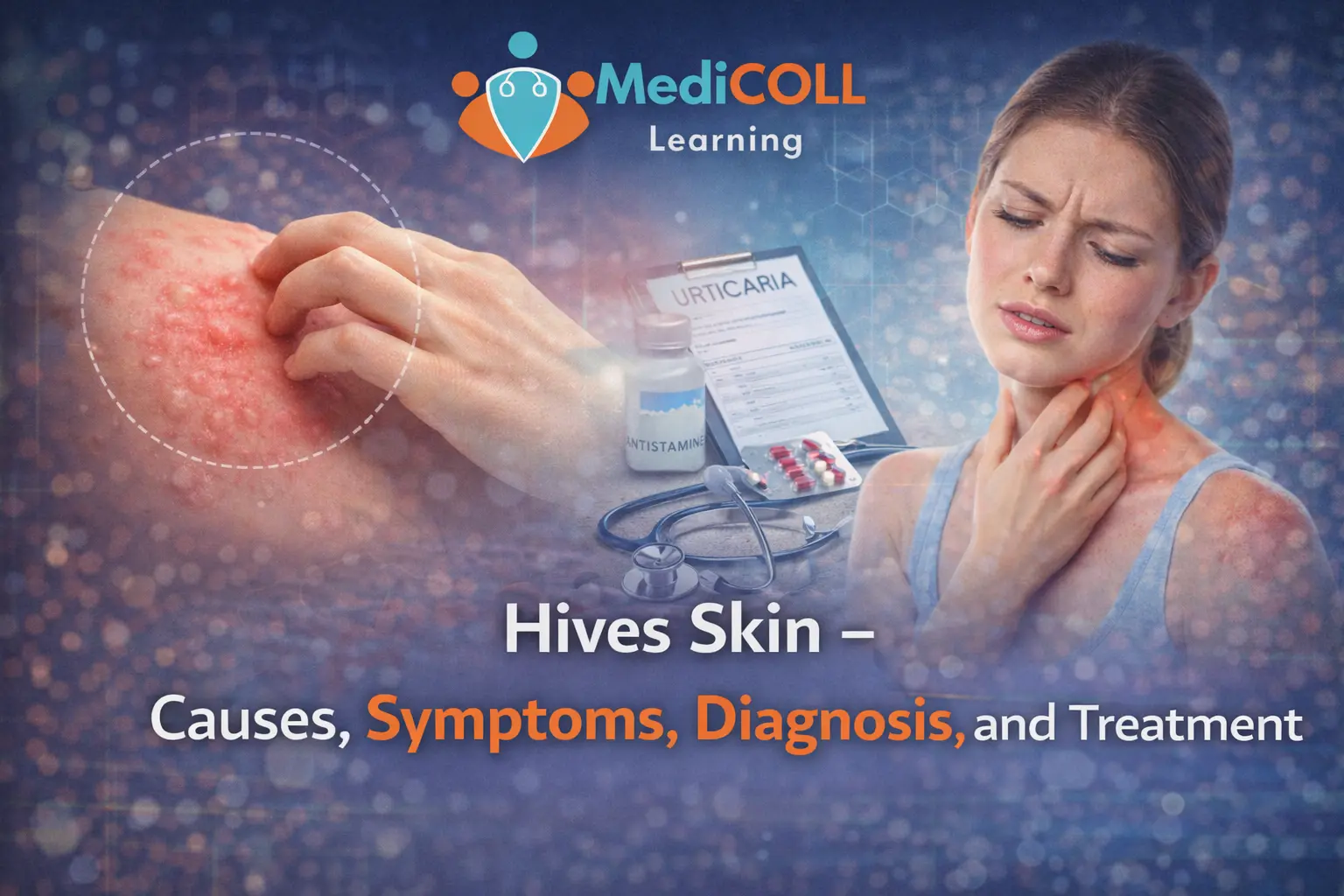
Urticaria skin rash, which people commonly refer to as hives on skin, is a common skin condition that affects individuals of all ages. The itchy raised welts develop suddenly but they can persist during the day and continue for multiple weeks. Medical treatment becomes necessary for certain conditions which include chronic urticaria and angioedema with hives but most cases remain mild and temporary. Effective management of hives skin condition requires knowledge about the causes of hives on skin, its symptoms, and available treatment methods.
Urticaria skin rash manifests as hives on skin which create raised welts that show red or pink or flesh-colored skin. The bumps exhibit various sizes and shapes which can combine to create more extensive swollen regions.
Hives skin condition typically occurs with allergic hives on skin but environmental factors and immune responses also contribute to its development. Hives are classified into three types which include acute hives that last less than six weeks, chronic urticaria which continues for more than six weeks, and immune mediated hives.
Some people may develop angioedema with hives which creates deeper swelling around the eyes, lips, and throat area.
Figuring out the causes of hives on skin is the first real step. Common triggers include:
In many cases of chronic urticaria, the exact cause remains unknown. However, allergic hives on skin are typically linked to histamine release in the body.
Symptoms of hives skin rash reaction can vary from mild infection to severe. Common signs include:
The rash will move across the body area while reappearing in a different body area. The most serious symptoms include breathing difficulties, which require emergency medical assistance.
Doctors use two main methods to diagnose hives skin condition, which include physical examinations and assessments of the patient's medical history.
The doctors recommended additional tests for persistent or recurring cases, which should include blood tests, allergy tests and skin biopsy testing in rare cases. It is important to identify the unique triggers in order to manage immune mediated hives effectively and to mitigate any future flare-ups or chronic conditions.
Effective hive skin treatment depends on severity and duration. Common treatment options include:
|
Treatment Type |
Purpose |
Examples |
|
Antihistamines |
Reduce itching and swelling |
Cetirizine, Loratadine |
|
Corticosteroids |
Control severe inflammation |
Prednisone |
|
Immunotherapy |
For chronic urticaria |
Omalizumab |
|
Epinephrine |
Emergency treatment |
Severe allergic reaction |
Doctors select antihistamines as their main treatment choice for urticaria skin rash. Medical professionals need to manage chronic cases through extended treatment, which requires their ongoing observation.
Steps to get rid of hives on the skin:
Pertaining to stress management and maintenance of a healthy immune system, the risk of chronic urticaria flare-ups may also subside.
Patients need to immediately consult a doctor if any hives on skin last for more than just a few days, get worse, or spread quite abruptly over the body. The patient needs emergency medical care when he or she develops severe throat swelling and lip swelling together with breathing difficulties, hives with angioedema. The hives skin condition can continue for one person when the person has an undiagnosed allergen or immune system condition that needs full medical evaluation and treatment.
The body of beyond mild skin hives requires home treatment through basic soothing methods. Cold compresses provide swelling reduction and irritation relief while oatmeal baths treat ongoing itching. Aloe vera gel provides relief to inflamed skin areas while proper hydration practices maintain skin health.
The body needs to stay away from both harsh soaps and hot showers because these products increase the symptoms. Home remedies shouldn't be used as a substitute for professional skin care because they won't work in cases which are high to moderate.
One area of concern is whether or not hives on the skin are contagious. No. Hives are completely uncommunicative and do not pass from one person to another. The skin hives will remain noncontagious, but the infectionthath caused them will spread to others.
According to MediColl dermatologists, managing hives on the skin requires identifying and avoiding triggers, maintaining a symptom diary, reducing stress, and using fragrance-free skincare products. The first step to treat allergic hives on the skin needs to happen immediately after they appear. Immediate treatment prevents complications, including angioedema with hives, and it enhances overall life quality.
The experience of handling hives on skin, proves to be highly challenging because their itchy swollen welts materialize without any warning. The majority of cases resolve themselves within a short period of time, but people who experience chronic urticaria need to see a doctor for their condition.
The best way to get some relief is to pin down the specific causes of hives on skin and learn to spot the early symptoms of hives skin rash. Once you know what you're dealing with, following the right hives skin treatment can make a huge difference in cutting down both the discomfort and how often they flare up. Since this is essentially an immune response, getting an early diagnosis is the smartest way to keep your skin under control.
© Copyrights Medicoll All rights reserved.