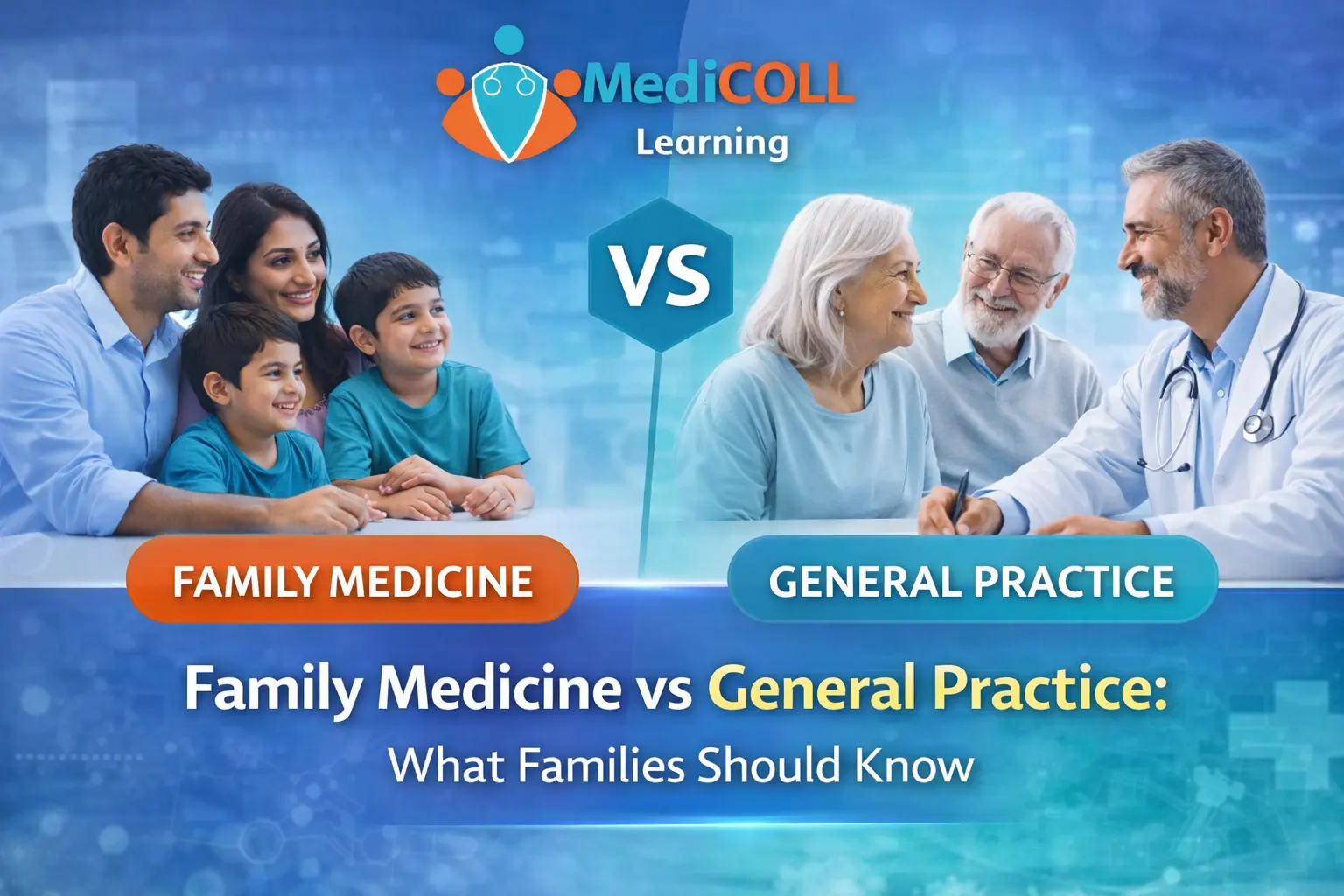
When families look for a primary doctor, two terms often come up: one is family medicine and other is general practice. Both words can appear similar but they carry different meanings. The major difference between family medicine vs general practice lies in how they are trained and manage care over time. Understanding this would help families to choose the right doctor for their long-term healthcare needs. Some families prefer one physician whom they can follow for years while others simply need a doctor for occasional illnesses or routine care
Family medicine is a primary healthcare specialty. It is focused on providing comprehensive, continuous, and holistic healthcare for individuals and families across all ages, genders, and conditions.
General practice is the cornerstone of primary healthcare. It provides comprehensive primary care services to individuals and families, regardless of the disease or personal characteristics. General Practitioners (GPs) diagnose and manage acute and chronic illnesses, offer preventive care, and coordinate referrals to specialists.
|
Comparison |
Family Medicine |
General Medicine |
|---|---|---|
|
Main focus |
Comprehensive primary care across age groups |
Primarily adult medical conditions |
|
Patient age group |
Children, adults and older people |
Mainly adults |
|
Care approach |
Preventive, continuous and coordinated care |
Diagnosis and management of adult medical conditions |
|
Training |
Depends on the doctor's qualification and training pathway |
Often associated with postgraduate training in internal medicine |
|
Long-term care |
Emphasises continuity across a person's life |
Can also provide long-term care for chronic conditions |
The discussion around family medicine vs GP comparison usually focuses on training, scope of care, and continuity of treatment. Family physicians undergo proper training to manage health issues of all ages and different stages of life.
General practitioners handle a wide range of everyday medical concerns but may refer patients to specialists when conditions require long-term management. In simple terms, both doctors offer primary care. However, family physicians are typically trained to provide more comprehensive and continuous care over the lifespan.
The key difference between family physician and general practitioner is both doctors treat common medical problems but their training pathways and approach to long-term care may differ slightly.
Doctors in family medicine often manage physical health, lifestyle factors, and preventive care which is why the role of a family physician often goes beyond treating symptoms. They help monitor health trends, guide vaccination schedules, and screen for chronic conditions.
Another important aspect of family medicine is continuity of care. Family physicians often understand personal health history, family history , and lifestyle factors which helps in understanding the disease risk better. When needed family physicians can also coordinate with specialists.
General practitioners handle a broad range of common health issues. So in simple terms, if someone asks “what does a general practitioner do?”
General Practitioners are often the first point of contact and diagnose common illnesses, prescribe medications, offer basic preventive advice, and guide patients toward appropriate specialist care when necessary.
Chronic diseases such as hypertension require regular monitoring and continued care. Family physicians are often involved in family medicine for long-term healthcare management. They track disease progression, adjust medications, and monitor lifestyle modifications. Because they often treat multiple family members, they may also recognize hereditary health risks early. General practitioners can also diagnose and manage chronic medical conditions. However, in complex patient cases, they may be referred to specialists for further management of the condition.

One defining feature of family medicine is that it covers healthcare across all age groups. This makes family healthcare services particularly useful for households that prefer one doctor for everyone. Family physicians are trained to handle pediatric care, adult medicine, preventive screenings, and geriatric concerns. General practitioners also treat patients from all segments of society. However, the depth of long-term follow-up may vary depending on the practice structure and healthcare system.
One of the benefits of family medicine over general practice is the ability to monitor health trends across generations. Another important aspect is preventive care emphasizes. Regular check-ups, lifestyle guidance, vaccination tracking, and health screening often become part of routine care. Families with children, elderly members, or chronic health conditions often find family medicine especially helpful.
A general practitioner may be suitable when someone needs quick medical attention for health concerns such as acute infections or mild injuries. General practice offers easy access to healthcare services which is convenient for short-term care needs. When patients are choosing between family doctor and GP, factors such as accessibility and urgency often play a role.
Family physicians are usually more involved in long-term disease monitoring, while GPs often focus on diagnosis and initial treatment. However ultimately, the question of which is better family medicine or general practice does not have a universal answer.
Both provide valuable primary care services to the patients. Understanding of the difference between general practice and family medicine care can help families to make informed choices based on their healthcare priorities.
Family Medicine is a medical specialty focused on providing continuous, comprehensive healthcare to individuals and families of all ages. Family medicine doctors manage common illnesses, preventive care, vaccinations, and chronic conditions such as diabetes and hypertension. They also help patients coordinate specialist consultations when needed.
General Medicine primarily focuses on diagnosing and treating adult patients with a wide range of medical conditions, including diabetes, hypertension, infections, respiratory diseases, and heart-related problems. In India, General Medicine is commonly associated with Internal Medicine, a specialty that emphasizes the prevention, diagnosis, and non-surgical management of diseases in adults.
The main difference between family medicine and general practice lies in the training and care approach. Family medicine focuses on comprehensive, long-term care of all ages, while general practice often focuses on diagnosing and treating common health issues.
Neither is universally better. Family Medicine may suit doctors interested in comprehensive, continuing care across age groups. General Medicine may suit those interested in adult medical conditions and internal medicine. The appropriate pathway depends on career goals and recognised training requirements.
Family Medicine focuses on comprehensive healthcare for people across all age groups, while General Medicine primarily deals with diagnosing and treating medical conditions in adults. Both fields include preventive care and the management of acute and chronic illnesses.
Yes. Both family physicians and general practitioners diagnose and treat common medical conditions such as infections and minor injuries.
Family medicine often places stronger emphasis on preventive care. It includes health screening, lifestyle counseling, and long-term risk monitoring.
Family medicine is generally considered better suited for long-term healthcare because it focuses on continuous care across all stages of life.
Yes. Both family physicians and general practitioners can diagnose and manage chronic diseases. However, family physicians are often more involved in long-term
monitoring.
Consultation costs of family physicians and general practitioners may vary depending on the healthcare system, clinic location, and services provided.
Families often choose a family physician when they want ongoing care, preventive guidance, and a doctor familiar with their full medical history.
Clinical studies suggest that continuous primary care, such as family medicine, may improve preventive care, early diagnosis, and overall health outcomes over time.
© Copyrights Medicoll All rights reserved.