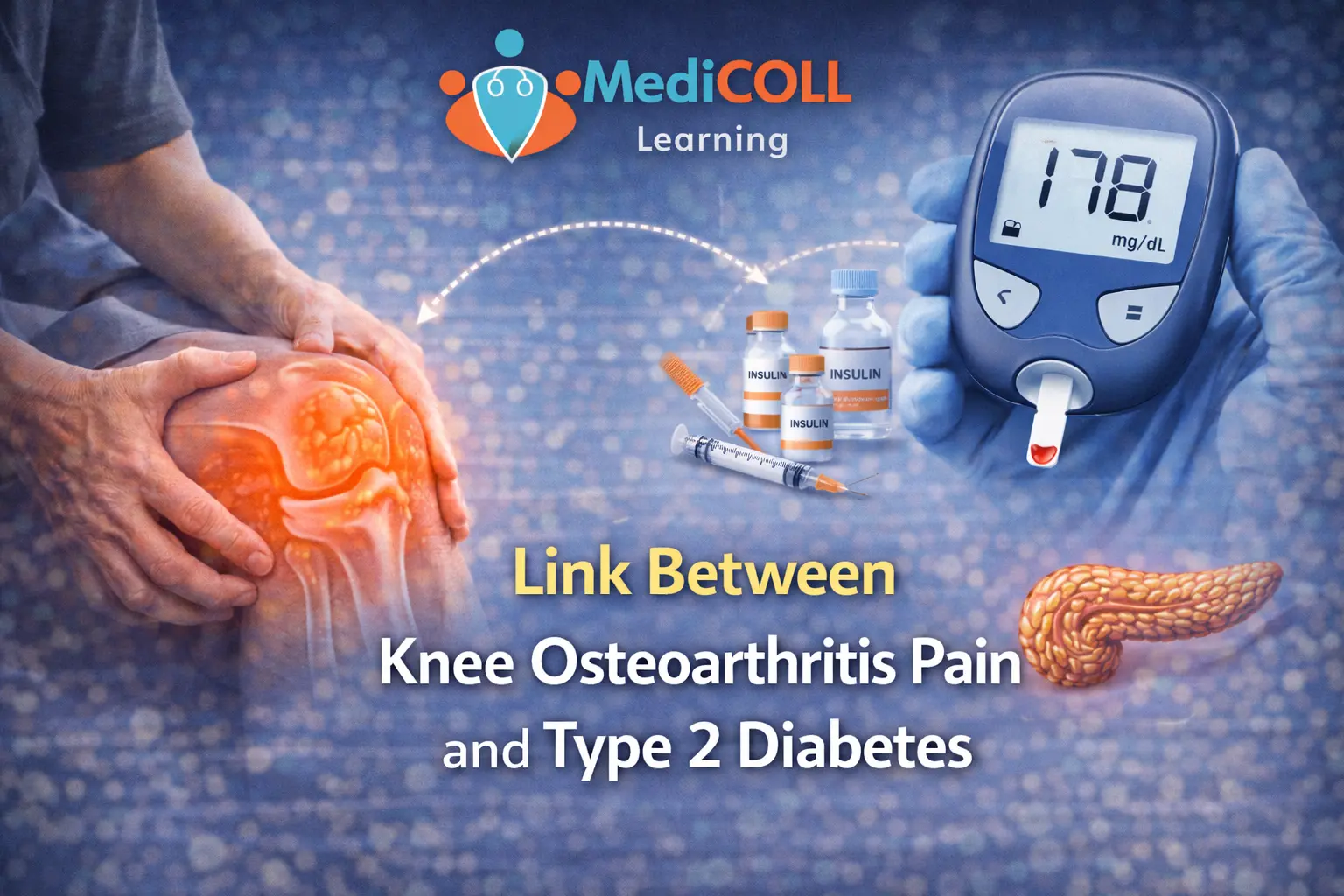
Doctors study the connection between knee osteoarthritis and diabetes more now than they did in the past. People who have Type 2 diabetes experience knee pain at higher rates than people who do not have this condition.
The joint pain problem becomes frustrating because it stops people from exercising which leads to higher blood sugar levels. The two problems create a situation that enables their mutual development. The pain increases, which makes diabetes control more difficult, while high blood sugar levels cause continuous joint inflammation. The link between type 2 diabetes pain and blood sugar control requires further research because it represents the only effective method to achieve successful results for patients over time.
Osteoarthritis (OA) functions as a degenerative joint disease which destroys joints by damaging cartilage. The disease causes patients to experience joint stiffness, swelling, and pain. The condition most frequently impacts joints which support body weight, particularly the knee joints. Type 2 Diabetes Mellitus (T2DM) is a metabolic disorder which produces two main symptoms, insulin resistance and high blood glucose levels.
The two conditions both serve as permanent medical conditions which develop over time. Research demonstrates that patients who experience symptomatic knee OA and glycemic targets face challenges in maintaining their blood glucose levels because of their decreased physical activity and ongoing bodily inflammation. The presence of arthritis pain and mobility limitations will create major challenges for diabetes control.
There are several overlapping risk factors on why these conditions often coexist:
Obesity is a major factor in both conditions. The extra weight results in greater stress on the knees while the body experiences increased difficulty with insulin processing. That's why knee osteoarthritis and diabetes come together.
New research shows that T2DM directly affects osteoarthritis development and disease advancement. The condition of chronic hyperglycemia results in body-wide inflammation and oxidative stress, which creates harm to both cartilage and joint tissues.
The research results show that in people where HbA1c outcomes in diabetes with OA experience more severe joint discomfort. The existence of ongoing inflammation leads to chronic pain and metabolic dysregulation.
OA and T2DM share common biological pathways that are interconnected through a disease mechanism. Long-lasting inflammation serves as the primary biological pathway that links both conditions together. The presence of high glucose levels in diabetes leads to the production of inflammatory cytokines which create damage to the joints. The impact of joint pain on diabetes outcomes is significant Severe knee pain decreases physical activity which creates difficulties for diabetes patients to manage their blood sugar levels. The cycle between joint health and metabolic stability creates a stronger connection between the two conditions.
Your body starts producing AGEs when your blood sugar levels remain high. The substance makes your cartilage lose the natural elasticity, then making it hard like a rubber band that has been overexposed to sunlight.
The extra sugar you consume keeps irritating your body. The body develops inflammation because of diabetes which causes increased knee pain for patients. Effective musculoskeletal pain diabetes management requires addressing both inflammation and glycemic control simultaneously.
Obesity functions as a common factor that drives both diabetes and heart disease. The body experiences increased knee joint stress because excess weight creates more pressure on the joints. Adipose tissue metabolically produces inflammatory substances which cause greater insulin resistance.
Both conditions cause joint pain and movement difficulties which lead to decreased physical activity in people affected by the conditions. Diabetes plus arthritis contributes to arthritis pain and mobility limitations. Decreased mobility is detrimental analysis of glucose readjustments, thus limiting optimal HbA1c outcomes in diabetes with OA.
Exercise has to become the core treatment method in case a person is suffering from osteoarthritis and diabetes. The body receives health advantages from regular exercise which improves insulin sensitivity and enables people to manage their weight while developing strength in their knee joint muscles. Physical activity barriers in diabetes care. Patients who experience pain will stop their exercise routine because their blood sugar levels will rise. The body requires swimming, cycling and physiotherapy as they serve as gentle activities that help manage these medical conditions. A doctor should keep his/her patient's medical pain managed so that the blood sugar levels of the patient do not spike off the range. Addressing type 2 diabetes pain and blood sugar control together ensures better clinical outcomes.
|
Factor |
Impact on Osteoarthritis |
Impact on Type 2 Diabetes |
|
Obesity |
Increased joint load and cartilage damage |
Increased insulin resistance |
|
Hyperglycemia |
Cartilage stiffness and inflammation |
Poor glycemic control |
|
Chronic Inflammation |
Joint degeneration |
Metabolic dysregulation |
|
Reduced Mobility |
Worsened joint stiffness |
Poor glucose regulation |
|
Pain Severity |
Activity limitation |
Difficulty achieving glycemic targets |
The medical condition of diabetes associates with knee osteoarthritis because both conditions affect joint health and metabolic processes of the body. The combination of chronic inflammation, obesity, hyperglycemia, and reduced mobility makes a cycle in which each health condition becomes more severe. The research shows that joint problems lead to worse HbA1c results among diabetes patients who have OA, which creates a need for comprehensive treatment methods.
The condition requires effective treatment through an integrated approach which combines weight management with methods to decrease inflammation, control pain and establish regular exercise routines. Diabetes outcomes improve when joint pain effects receive attention, which results in better mobility and glycemic control, thus enhancing overall quality of life.
© Copyrights Medicoll All rights reserved.