| Blog Summary |
| Nipah virus infection is a serious zoonotic disease with a fatality rate of 40 to 75 percent and currently has no approved vaccine or specific antiviral treatment. The virus spreads through infected animals, contaminated food, and direct human-to-human contact. Early identification of symptoms, timely diagnosis, proper isolation measures, and strict infection control practices are essential to reduce transmission and improve patient outcomes. This blog explains the causes, symptoms, transmission, prevention strategies, and public health importance of Nipah virus infection in detail. |
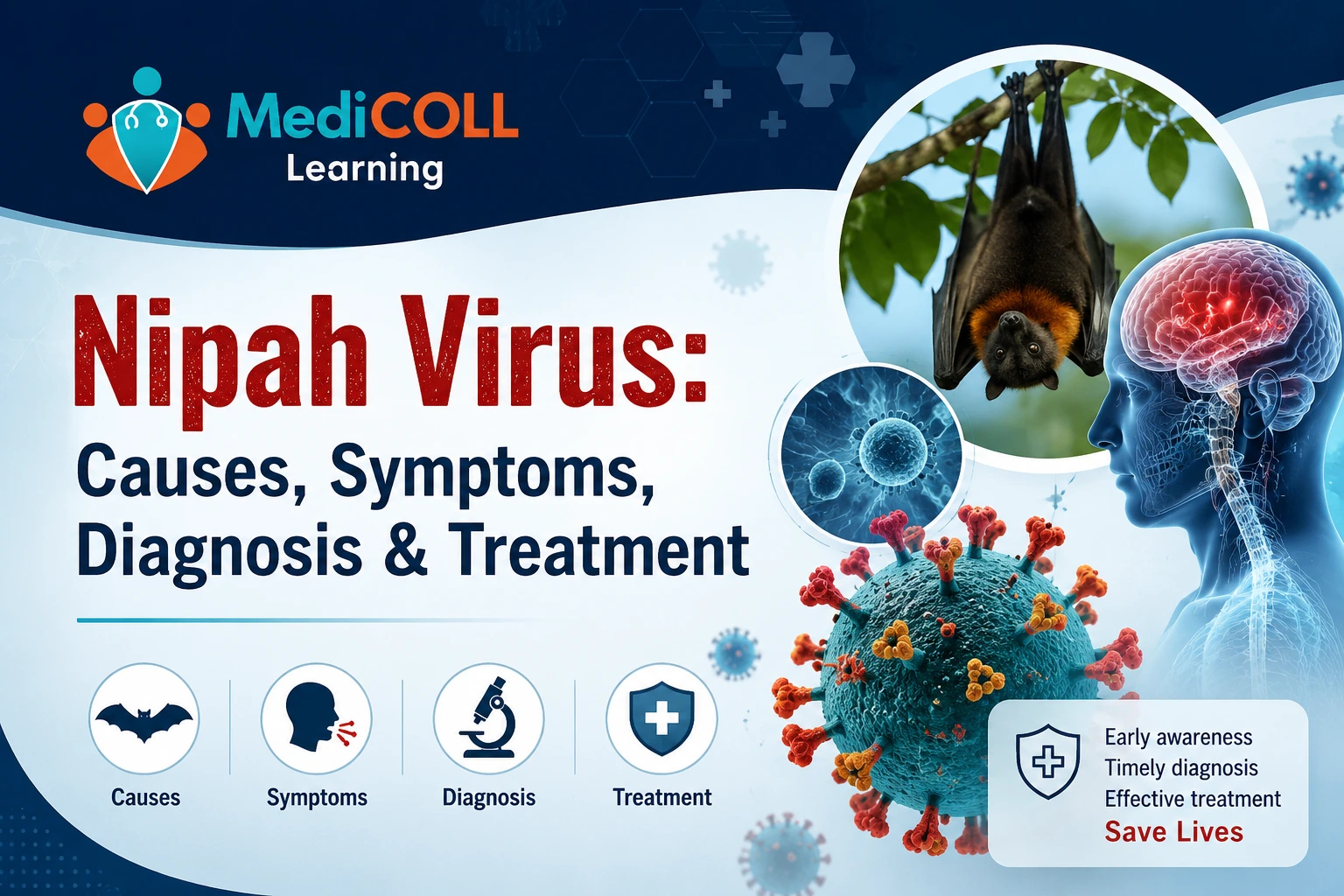
Nipah virus is a rapidly progressing disease and has a high mortality rate. It calls for prompt, immediate, intensive, and coordinated responses whenever cases are detected. First identified in Malaysia in 1998 to 1999, it subsequently spread to Singapore. This zoonotic virus has since caused repeated outbreaks across Bangladesh, India, and other parts of South and Southeast Asia.
For most patients, Nipah virus disease begins with symptoms that resemble any routine febrile illness like fever, headache, and muscle pain. However, the virus can escalate to severe conditions within days like acute encephalitis, respiratory failure, and coma. That speed of progression is what makes clinical recognition so important.
Fruit bats of the Pteropus genus carry the virus naturally. The virus can reach humans through infected animals like bats, pigs, dogs and cats, contaminated food, or direct contact with a sick person. Healthcare workers and caregivers face exposure risk too, which is why infection control during outbreaks is crucial.
Nipah virus disease is a zoonotic illness caused by the Nipah virus, a member of the Paramyxoviridae family under the genus Henipavirus.The virus primarily targets the brain and respiratory system.
The symptoms can worsen within days. In severe cases it leads to acute encephalitis and respiratory distress. The disease was first identified during an outbreak among pig farmers in Malaysia. Fruit bats of the Pteropus genus, commonly known as flying foxes, are the confirmed natural reservoir of the virus.
Outbreaks happen almost every year in parts of Asia, primarily Bangladesh and India, with occasional cases reported in other countries where the Pteropus bat species is found.
Nipah virus causes can be attributed to animal reservoirs. Fruit bats carry the virus in their bodily fluids such as urine, saliva, or droppings. When these bodily fluids come into contact with animals or food sources, the virus can pass to other species including humans.
During the Malaysia 1999 outbreak, infected bats transmitted the virus to pigs. Pig farmers were the first human cases identified. In Bangladesh and India, the more common route has been consumption of raw date palm sap contaminated by bat secretions. People who climb trees where bats rest have also been infected through direct contact with bat fluids. Once a person gets infected with Nipah virus, they can pass it to others through their own bodily fluids.
Nipah virus spreads through several routes which makes outbreak containment particularly challenging. Direct contact with infected animals or their secretions remains the primary route of transmission for the nipah virus. Consuming fruit or raw date palm that bats have partially eaten is an established transmission pathway in South Asia. Human to human transmission is also possible through respiratory droplets when an infected person coughs or sneezes.&

Nipah virus symptoms usually appear within four to fourteen days of exposure. Primary symptoms of the infection include fever, headache, cough, sore throat, vomiting, diarrhea and muscle pain. These initial clinical representations are non-specific and can easily be linked to other common febrile illnesses.
As this disease progresses, neurological symptoms may develop like confusion, disorientation, slurred speech and seizures. In severe cases, acute encephalitis sets in rapidly and can lead to coma. Respiratory distress is also seen in a number of patients suffering from this virus. Clinicians working in endemic regions should be vigilant and maintain a high suspicion for Nipah virus infection in any patient with fever and rapid neurological deterioration.
Nipah virus diagnosis requires laboratory confirmation and cannot be established on clinical grounds alone. During the acute phase of illness, real-time polymerase chain reaction, known as RT-PCR (Reverse transcription polymerase chain reaction) , is the most widely used diagnostic method. It detects viral RNA from throat swabs, nasal swabs, cerebrospinal fluid, urine, or blood samples.
In the later stages or after recovery, enzyme-linked immunosorbent assay, or ELISA, is used to detect antibodies in the blood. Virus isolation in a biosafety level 4 laboratory remains the gold standard for confirmation but is only available at specialized reference centers.
As of 2026, there is no approved antiviral drug or vaccine specifically developed for Nipah virus infection and hence, Nipah virus treatment is currently symptom based .
Supportive care of the infection includes managing fever, controlling seizures, and addressing respiratory distress. Patients with severe encephalitis often require intensive care support including mechanical ventilation. Hydration, rest, and symptomatic medications for nausea and breathing difficulty form the core of day to day management.
Monoclonal antibody therapy, particularly m102.4, has shown encouraging outcomes in animal studies and has been used in select critical human cases. Researchers are also studying antiviral candidates and vaccine options. Early supportive care and strict infection control remain the mainstay of managing Nipah virus disease in clinical settings until an approved treatment becomes available.
Nipah virus fatality rate is one of the highest among known infectious pathogens. According to the Centers for Disease Control and Prevention, death may occur in 40 to 75 percent of all confirmed cases.
In the original 1999 Malaysia outbreak, the fatality rate was approximately 40 percent. In Bangladesh, where outbreaks occur more frequently and access to advanced clinical care is more limited, rates have been reported as high as 70 to 75 percent. The high fatality rate along with no specific treatment available makes identifying it early and controlling the spread the top priorities.
Nipah virus prevention depends on reducing exposure to known sources and maintaining strict hygiene and infection control practices in both community and clinical settings.
Practical prevention measures include:
During outbreaks, isolation of confirmed and suspected cases along with thorough contact tracing are essential components of the public health response.
For healthcare workers, personal protective equipment including gowns, gloves, eye protection, and appropriate masks must be used consistently when managing suspected or confirmed cases. Disinfecting clinical surfaces with appropriate agents is also part of standard infection control during outbreak settings. Nipah virus prevention and treatment together form the backbone of outbreak management given that no vaccine is yet available for widespread use.
Nipah virus infection is caused by the Nipah virus. It is a zoonotic pathogen naturally carried by fruit bats of the Pteropus genus. Humans get infected through contact with infected animals or infected persons through bodily fluid and contaminated food.
Early symptoms of Nipah virus include fever, headache, cough, sore throat, vomiting, and muscle pain. The symptoms usually appear within four to fourteen days of exposure. These can progress rapidly to neurological symptoms such as disorientation, seizures, and encephalitis.
In earlier stages of infection, Nipah virus is diagnosed through RT-PCR using swabs, blood, urine, or cerebrospinal fluid samples. In later stages of infection or for recovery verification, ELISA is used.
As of now, there is no approved particular antiviral treatment for Nipah virus infection. The management of the infection is supportive and focuses on symptom relief like controlling fever, seizures, and respiratory distress. Research into vaccines and targeted antivirals is still continuing.
Nipah virus prevention includes avoiding fruits or food contaminated by infected animals and direct bat contact. Other ways of prevention include using protective equipment around animals and infected patients, washing fruits thoroughly. Following strict infection control protocols in healthcare settings and isolating confirmed cases are a few additional preventive steps.
© Copyrights Medicoll All rights reserved.