| Blog Summary |
| High blood pressure or hypertension often develops without obvious warning signs. If left unmanaged, it can place serious stress on the heart, blood vessels, and kidneys. This blog explains the causes, symptoms, complications, and effective lifestyle and medical approaches that help manage blood pressure and support long-term heart health. |
High blood pressure also known as hypertension is often called a silent killer as it mostly has no noticeable symptoms. Yet it significantly increases the risk of heart diseases such as heart attack and kidney diseases. It is normal to have fluctuation in blood pressure throughout the day based on physical activity, stress, or body position. Several studies show that in order to bring down the readings quickly, one should practice deep breathing to calm the nervous system, drink a full glass of water, and lie down in a quiet, cool room to rest. However, hypertension management for the long term requires practicing preventive steps such as eating healthy and keeping an eye on any risk factors that can further complicate the condition.
High blood pressure, also known as hypertension. It is a condition where the force of blood pushing against the artery walls stays consistently too high. Over time, this constant pressure damages blood vessels and strains the heart making it work harder than it should.
It is one of the most widespread chronic conditions globally and it is particularly concerning that most people have no idea their blood pressure is high. There are no obvious symptoms in the early stages, which is why hypertension often goes unnoticed until severe symptoms show up like chest pain. Identifying the risk factors early and managing it well makes a real difference for the individual.
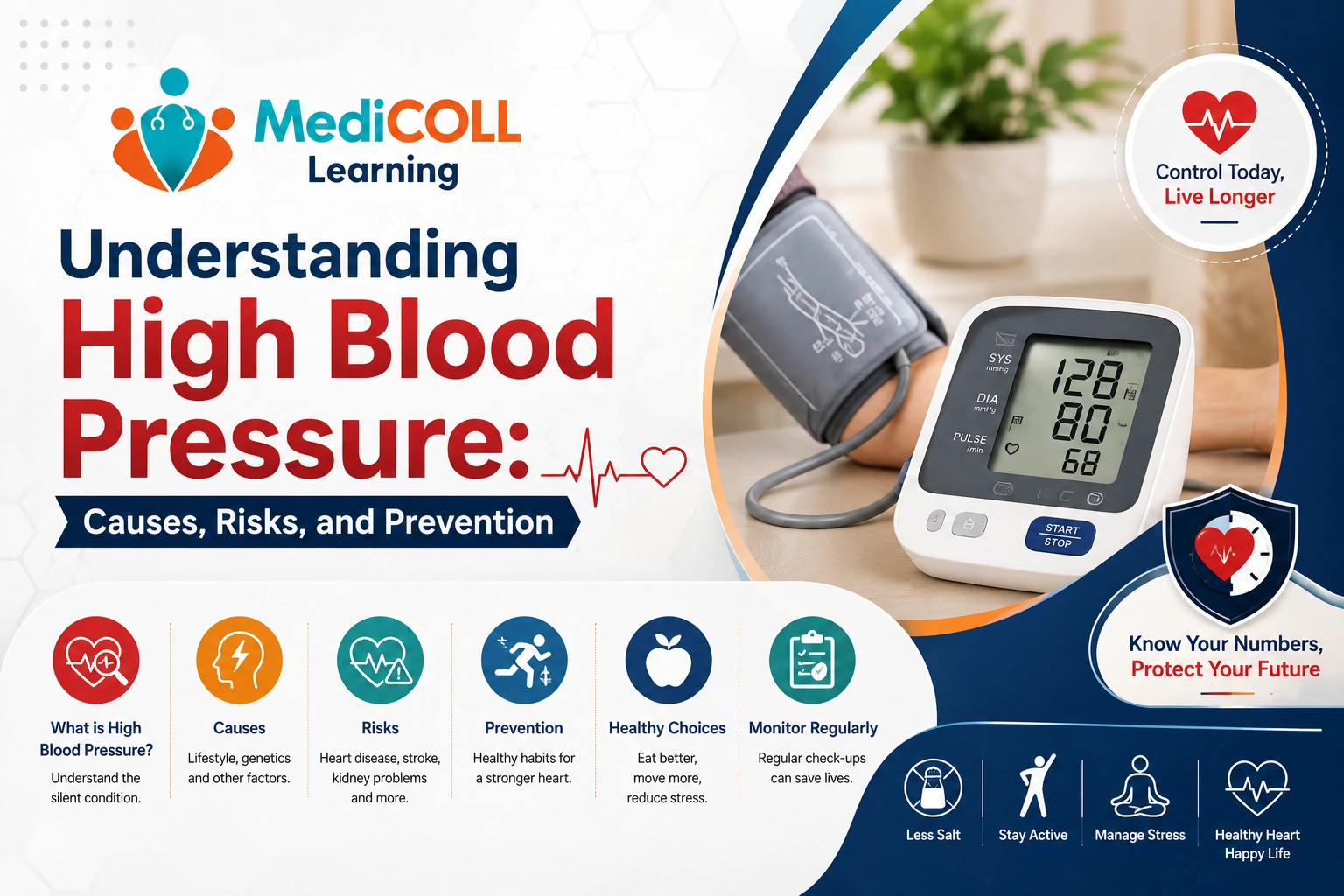
When a blood pressure reading is taken, two numbers are recorded. The top reading is the systolic pressure which measures the force of blood against artery walls when the heart beats. The bottom reading is the diastolic pressure which measures the force of blood when the heart is at rest between beats.
A normal reading is around 120/80 mmHg. Readings consistently above 130/80 mmHg are generally considered high and may indicate hypertension. Both of the numbers matter and either one being persistently elevated is enough to raise concern.
Blood pressure is generally categorized into three stages:
Increased level of blood pressure develops gradually over time due to a combination of lifestyle, genetic, and environmental factors. Some of the most common causes of high blood pressure include a diet high in sodium, low physical activity, excess body weight, and chronic stress.
Smoking and excessive alcohol consumption also contribute significantly to rising blood pressure. In many patient cases, no single trigger can be identified and the condition develops quietly over years.
There are mainly two types of hypertension:
There is another type of high blood pressure called white coat hypertension. In this, a person can have blood pressure elevated in a clinical setting such as a hospital or doctor’s clinic but normal at home. If hypertension runs in the family, the risk is notably higher which makes early monitoring important even in the absence of symptoms

The early signs of high blood pressure are easy to miss or are often attributed to other conditions. Symptoms mostly appear after blood pressure reaches a significantly high level. They may include:
It is important to go for a regular health check up as the hypertension symptoms usually don't show up or change throughout the day making it difficult to identify hypertension as the underlying cause.
When blood pressure stays high over a long period of time, it puts considerable strain on several organs in the body. The high level of blood pressure affects multiple systems simultaneously.
The most serious risks include heart disease, stroke, kidney damage, vision loss, heart failure and cognitive decline. The risks of high blood pressure are compounded when other comorbidities such as diabetes, obesity, or high cholesterol are present alongside hypertension.
Several factors that can increase the chances of developing high blood pressure includes:
Hypertension causes and treatment go hand in hand. Understanding what drives blood pressure up is the first step toward managing it effectively. In most cases, treatment is a combination of lifestyle changes and medication, depending on how high the readings are and whether any underlying cause is present.
Lifestyle modifications alone can make a significant difference for those with mildly elevated readings. When blood pressure is consistently high or when lifestyle changes are not enough, medication is usually recommended.
Common classes of medications used include ACE inhibitors, beta blockers, calcium channel blockers, and diuretics. The choice of medication depends on the individual's overall health profile and any existing conditions.
Regular follow ups with a doctor are important to assess how well blood pressure is being managed and whether any adjustments in lifestyle and medication doses are needed.
High blood pressure prevention starts with small and consistent habit changes in everyday life. The habits maintained over time can be enough to keep readings of blood pressure within a healthy range.
Some of the preventive strategies to maintain the normal range of blood pressure are:
High blood pressure is a condition that can quietly progress for years without any obvious signs. But with the right awareness, it is entirely manageable for all. Being aware of the causes, recognising the early symptoms, and taking preventive steps consistently can make a significant difference in long term health outcomes.
Every step counts for prevention and management of the blood pressure for those already diagnosed. Measures like making dietary changes, staying physically active, or working closely with a doctor for hypertension management can truly help. Keeping blood pressure under control is an ongoing commitment to overall health and wellbeing.
© Copyrights Medicoll All rights reserved.