| Blog Summary |
|---|
| Telemedicine in India has evolved from a few pilot initiatives into an important part of the country's healthcare system. Today, both government and private platforms provide millions of online consultations, improving access to medical care in urban and rural areas alike. This blog explains the growth of telemedicine, its benefits for doctors and patients, the challenges it faces, and its future role in India's healthcare landscape. |
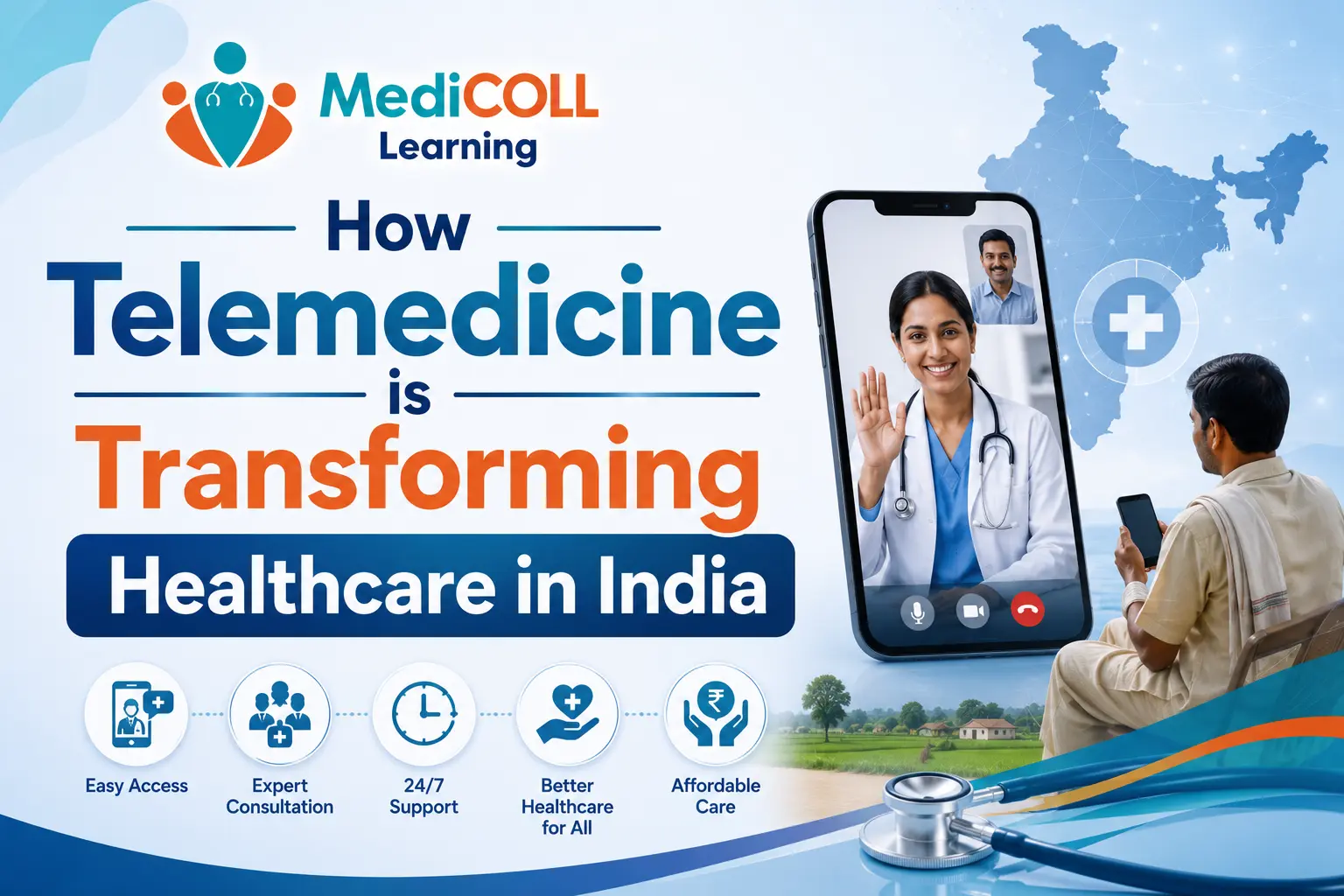
A patient in a remote area can now consult a cardiologist in a city without leaving the village. A diabetic living in rurals can receive medication adjustments through a smart phone instead of travelling to a hospital. These are no longer isolated examples. Telemedicine has become one of the biggest drivers of healthcare digital transformation in India, changing how millions of patients access medical care.
Telemedicine is not a new concept in India. Early pilot projects date back to the early 2000s, connecting a handful of hospitals through satellite and internet-based links, at a time when smart phones did not exist. For years after that, it stayed limited to a few specialty hospitals and disaster-response situations. Its usage picked up noticeably during the COVID-19 pandemic, once doctors had a clearer framework to consult patients remotely. Since then, more hospitals and patients have adopted it as a regular option. This blog looks at how that growth happened, what it means for doctors and patients today, and what digital healthcare in India might look like going forward.
Telemedicine means consulting a doctor through video, audio, or text instead of a physical visit. In India, it has gone through a few distinct stages, starting with small pilot projects in the early 2000s that connected a limited number of hospitals. Since then, usage has increased gradually, with a sharper rise after the pandemic pushed both doctors and patients to try it out of necessity.
Telemedicine is only one piece of the wider role of digital healthcare in India. Remote consultations get most of the attention, but there is a lot happening underneath like electronic health records, ABHA IDs under the Ayushman Bharat Digital Mission, electronic prescriptions, remote patient monitoring, and AI tools that help clinicians sort through information faster.
None of this works in isolation. A doctor reviewing a patient's history no longer has to wait for an old file to be located, and a lab result can reach a specialist the same day it's generated instead of sitting in a folder somewhere. As healthcare digital transformation continues, telemedicine is expected to work alongside these digital tools rather than replace traditional healthcare services.

Telemedicine impact on healthcare in India mainly shows up in follow-ups, medication reviews, and chronic disease management. A diabetic or hypertensive patient often does not need a half-day hospital trip just to review numbers and adjust a dose. Senior citizens, who often find travel to a hospital the hardest part of getting care, tend to benefit the most from this shift.
The benefits of telemedicine in healthcare are mostly practical and have stayed consistent as usage has grown.
These points explain why the role of telemedicine in Indian healthcare has grown from an occasional option to something many patients now rely on.
Telemedicine for rural healthcare often works through a hub-and-spoke model, where a smaller local clinic acts as the spoke and a larger hospital acts as the hub. A health worker in a village can bring in a specialist from a bigger hospital over video, without asking the patient to travel.
This kind of network has helped connect a large number of primary care centres to bigger hospitals, reaching areas as remote as island territories and high-altitude regions. It has narrowed the gap for patients who earlier had no specialist access at all.
There are a few challenges of telemedicine in India that still need attention:
Telemedicine has made healthcare easier to reach to people, but it was never meant to cover everything. Some situations may need hands-on examination or equipment that a video call simply cannot provide.
If any of these come up, the right move is to get to a hospital, not a consultation app. Recognising these limitations is an important part of the role of telemedicine in Indian healthcare, ensuring that patients receive the most appropriate level of care.
The future of telemedicine in India is expected to be shaped by continued improvements in digital health infrastructure. Healthcare providers are already utilising AI-assisted documentation to cut down on administrative work, and clinical decision support tools are starting to help doctors sort through patient information a bit faster.
Wearables are becoming more common particularly for people managing chronic conditions, giving doctors a way to check in on a patient's numbers between appointments rather than only during them. Wider use of ABHA IDs and other parts of the Ayushman Bharat Digital Mission should also make it easier for records to move securely between providers who are part of the system.
Electronic prescriptions and home diagnostic devices are also making follow-up care more workable for the suitable cases. And as smart phones and internet access keep spreading, the future scope of digital healthcare will likely help in integrating different technology together that will support more connected and accessible healthcare services across India.
Doctors need working knowledge of what a remote consultation can safely diagnose, how to document a teleconsultation correctly, and where the regulatory limits sit, especially around prescribing across state lines.
Institutions like MediCOLL Learning have built fellowship and certificate programs around this kind of gap, giving working doctors structured, CPD-accredited training in areas such as clinical nutrition, dermatology, and mental health without needing to pause their practice. As telemedicine becomes a more familiar part of daily care, this kind of ongoing training is becoming just as relevant as the technology itself.
Healthcare digital transformation including telemedicine has been growing as smartphone use, internet access, and general awareness reach more areas.
Telemedicine is helping through a hub-and-spoke model that connects local clinics to specialists at hospitals. This reduces travel time and gives local health workers real-time expert support.
Some of the challenges are uneven internet access, low literacy of technology among some patient groups, regulatory uncertainties, and general infrastructure gaps.
Q. What does the future of telemedicine in India look like?
Growth of telemedicine in India is expected to continue. It is supported by AI-based tools, wider remote monitoring through wearables, and better integration between different health record systems.
© Copyrights Medicoll All rights reserved.