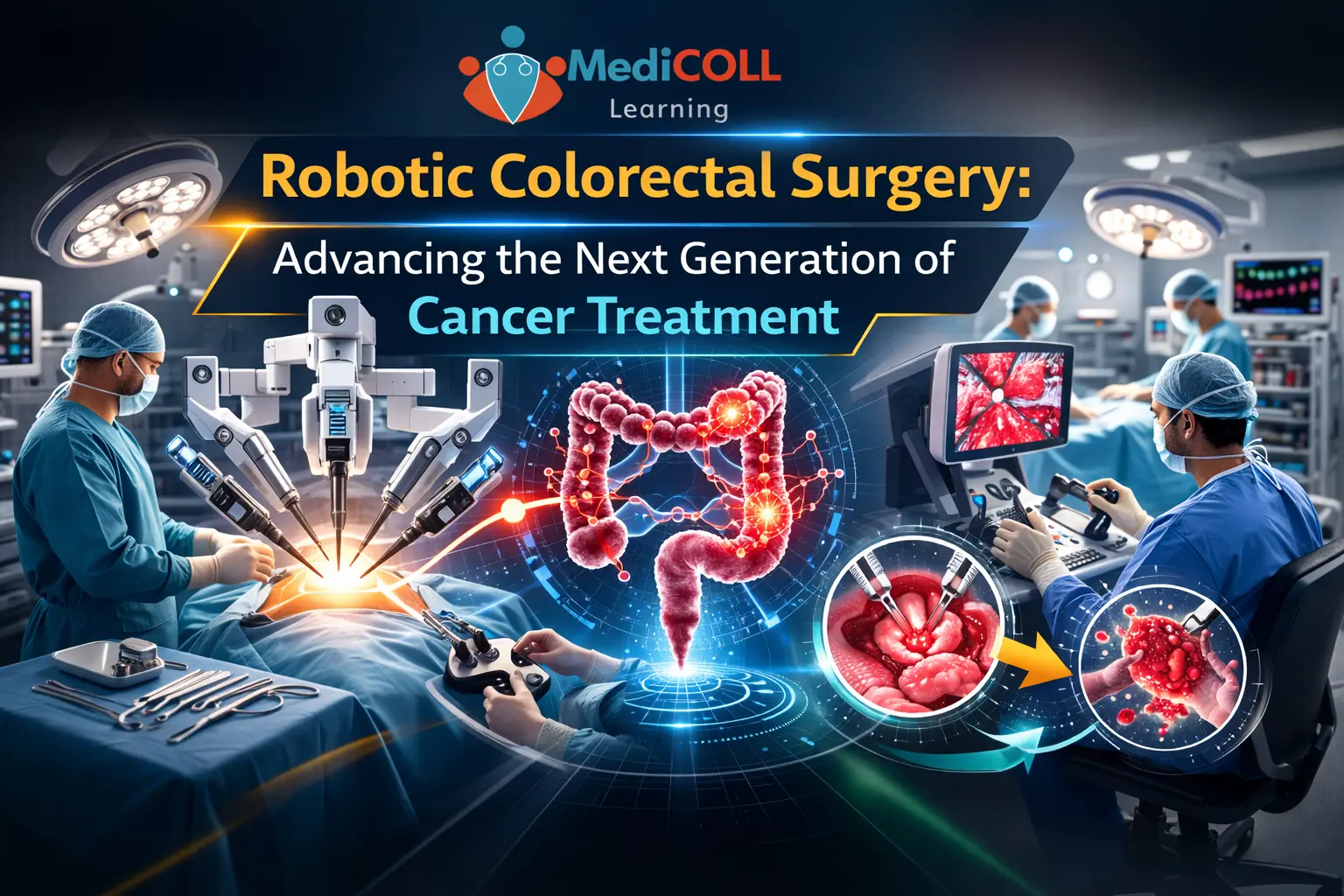
Colorectal cancer is one of the most commonly treated malignancies all around the world. Over the years, surgical approaches to treat colorectal cancer have evolved from open procedures to laparoscopic techniques to now robotic platforms. These modern advancements help in improving precision while reducing the surgical trauma for a patient.
Nowadays robotic colorectal surgery is becoming an important part of surgical treatment alternatives. It allows surgeons better visualization and refined movements during complex surgical procedures involving the colon and rectum. With continuous advancements in surgical robotics, treatment is becoming more precise, controlled, and patient-focused to deliver high quality of life for the patients.
Cancer surgery requires accuracy when operating near delicate nerves and blood vessels. Small variations in movement during surgery can have a long-term effect on the patient outcome. Surgeons aim to remove tumors completely while preserving surrounding structures that control bowel and urinary function for better clinical outcomes.
The introduction of robotic-assisted colorectal procedures has changed how surgeons approach the surgical cases. It provides enhanced dexterity and stable instrument control allowing more refined movements in confined anatomical space. This also helps in improving surgeon comfort and clinical outcomes.
Modern colorectal oncology calls for careful tumor removal while preserving healthy tissue and anatomical structures. Precision of the surgery becomes important in rectal cancers as the pelvic space is narrow and technically challenging. Surgeons have to maintain clear margins while protecting surrounding nerves and blood vessels. With advanced colorectal surgery techniques, robotic platforms allow better instrument articulation and improved control during dissection
The direction of cancer surgery is clearly moving toward approaches that reduce tissue trauma while maintaining oncological safety. Minimally invasive approaches are gradually becoming the preferred standard in many healthcare centers.
The integration of advanced minimally invasive techniques is supported by better imaging and robotic systems. The aim of these developments in colorectal cancer management is to combine precision, safety, and improved functional outcomes.
Surgical excellence was earlier defined by tumor removal but now it is also defined by functional preservation and patient recovery. Consistency and precision during surgery directly influence oncological as well as functional outcomes.
With 3D visualization robotic surgery, surgeons benefit from a magnified, high-definition view of the operative field which helps in having enhanced depth perception. This allows more accurate tissue handling and refined movements in anatomically confined areas such as the pelvis.
Successful colorectal cancer surgery is hugely depend on achieving complete tumor removal while preserving surrounding structures. Surgeons work close to vital nerves, blood vessels, and pelvic organs in colon and rectal surgical procedures. Minor technical variations in surgery can influence postoperative recovery and long-term function of the body.
Robotic colon cancer surgery allows more controlled dissection and stable instrument movement during complex resections. Similarly, robotic rectal cancer surgery offers improved access within the narrow pelvic cavity while protecting nearby anatomical structures and supporting more precise tumor clearance.
Innovation in colorectal cancer care focuses mainly on reducing surgical trauma while maintaining effective tumor removal. Smaller incisions, refined instruments, and better visualization have changed how surgeons approach complex resections.
Minimally invasive colorectal surgery has become an important advancement in the field of medicine. In comparison to traditional open procedures, robotic surgery typically results in less blood loss, reduced postoperative pain, lower complication rates and improves postoperative recovery.
Smaller incisions are associated with less postoperative discomfort and lower risk of wound-related complications. This translates into earlier mobility and improved overall recovery experience for patients. Some of the benefits of robotic colorectal surgery are:
Robotic platforms are redefining how colorectal cancer surgeries are performed. Surgeons are better equipped to preserve function and reduce complications with improved visualization, refined instrument control, and greater precision.
As surgical technology evolves, robotic cancer surgery treatment is becoming an integral part of modern colorectal care. Ongoing research and training will further determine how these systems integrate into standard practice and expand treatment possibilities for cancer patients.
Robotic surgery improves colorectal cancer outcomes by precise tumor removal while preserving surrounding structures. Enhanced visualization and instrument control helps in reducing complications, improve recovery, and help achieve clear surgical margins in patients.
Robotic colorectal surgery is a minimally invasive procedure in which a robotic system is used by surgeons to remove cancer from the colon or rectum. The robotic surgery also enhances precision and control of the procedure.
Robotic surgery helps to treat colon and rectal cancer by accurate tumor removal while preserving surrounding nerves and tissues. This may also help in improving recovery rate and reduce postoperative complications in patients.
Yes, robotic colorectal surgery is considered safe and effective when performed by trained surgeons. The surgery outcomes are comparable or better than traditional minimally invasive approaches.
The cost of robotic colorectal surgery is generally higher than conventional surgery due to advanced technology and equipment use. It may vary depending on hospital and location.
Robotic surgery provides enhanced 3D vision and greater instrument flexibility compared to standard laparoscopy. This allows more precise movements in confined spaces.
Potential benefits of robotic colorectal surgery include:
Yes, robotic surgery reduces time and pain in many patients. Smaller incisions and less tissue trauma may result in reduced pain and faster recovery.
The duration varies depending on case complexity. However, it is generally similar to laparoscopic surgery but sometimes slightly longer during early adoption.
Hospital stay after robotic colorectal surgery is often shorter compared to open surgery. However, the stay also depends on patient condition and recovery progress.
© Copyrights Medicoll All rights reserved.