| Blog Summary |
|---|
| A sore throat can have many causes, from dry air to a viral infection, while a throat infection usually points to something more specific that may need medical attention. Both terms are often used interchangeably, but they don't always mean the same thing. This blog breaks down the symptoms, causes, and treatment options for both, and helps to figure out when to see a doctor. |
Throat pain is one of the most commonly reported complaints across all age groups and clinical settings. It can arise from something as minor as dry air or as significant as a bacterial infection requiring antibiotic therapy.
The difference between a sore throat and a throat infection is not always obvious. Both can cause pharyngeal discomfort and difficulty swallowing. Being aware of the difference between the two can help determine whether to rest at home or seek medical attention.
A sore throat refers to pain, irritation, or scratchiness in the throat that often gets worse when swallowing. It is one of the most common reasons people visit a clinic and, in most cases, does not point to anything serious.
Sore throat symptoms usually include a raw or burning feeling in the throat and discomfort while speaking or eating. On examination, mild redness can be found. Most cases clear up on their own within five to seven days without any specific treatment.
A throat infection occurs when a virus or bacterial pathogen invades and inflames the lining of the throat or tonsils. The inflammatory response is more intense than in a routine sore throat and the symptoms reflect that.
Throat infection symptoms commonly include a sudden onset of throat pain, fever, visibly red and swollen tonsils, white patches or pus at the back of the throat, and swollen lymph nodes in the neck. Many of these infections do not resolve on their own particularly bacterial ones and require treatment to clear up.
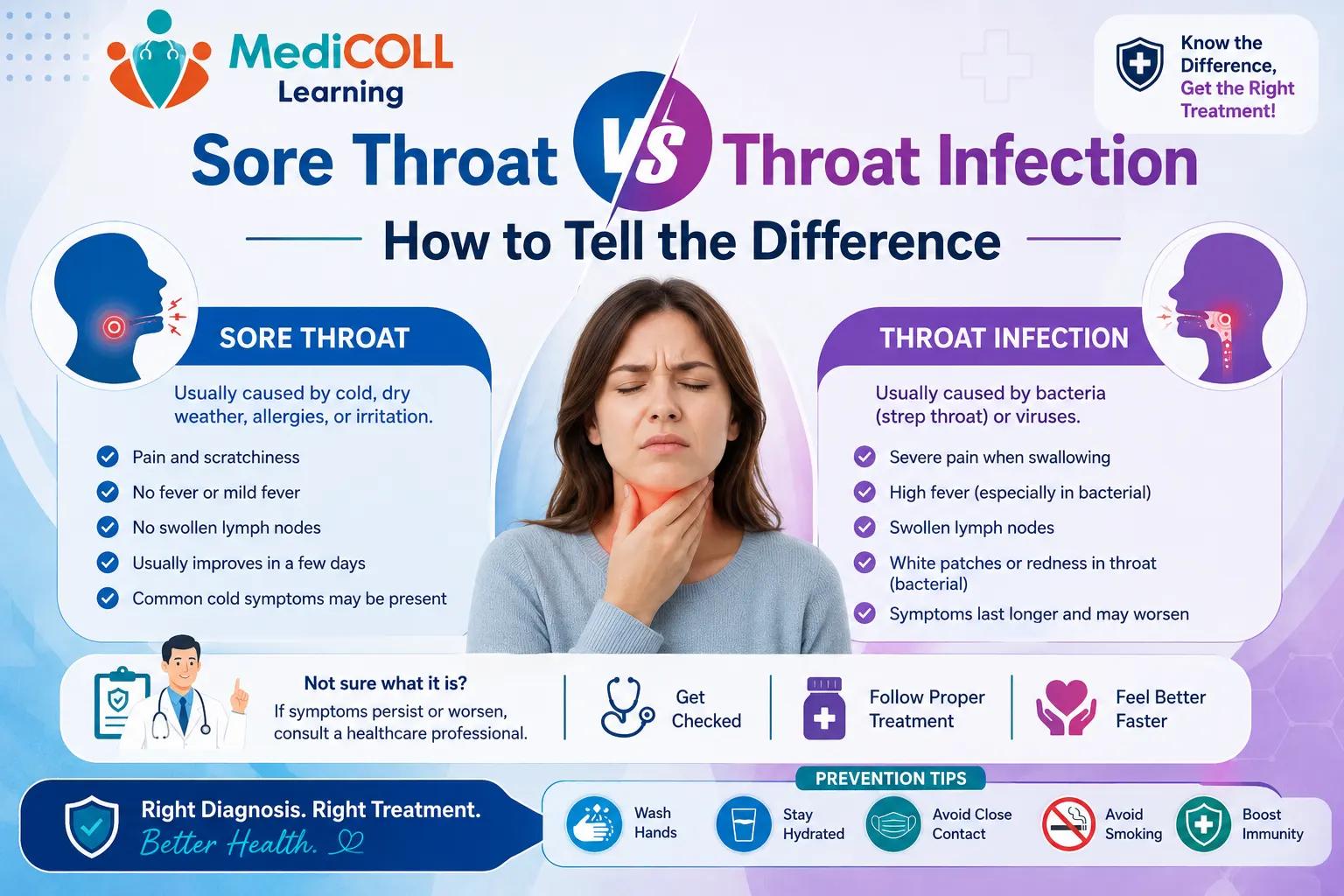
Symptoms of a sore throat tend to come on gradually, often beginning as mild discomfort before worsening over a day or two. The throat may appear mildly red on examination, but significant swelling or pus is usually absent. Patients often present with other upper respiratory symptoms alongside the throat discomfort, including a runny nose, cough, sneezing, and occasionally mild eye irritation.
A low-grade fever (body temperature between 99.1°F and 100.4°F) may or may not be present with other symptoms. The combination of cough and a runny nose is an important clinical clue pointing toward a viral cause rather than a bacterial one. Most cases of this kind resolve within seven days without any specific intervention.
The onset here is usually sudden rather than gradual. Painful swallowing is almost always present from the start and can be severe enough to limit food and fluid intake. Fever tends to run higher than in a simple sore throat, typically between 101°F (38.3°C) and 103°F (39.4°C), and lasts longer.
On examination, the tonsils are red and enlarged, and a swollen throat with white patches or streaks of pus at the back is a common finding in bacterial cases. Swollen, tender lymph nodes along the front of the neck are frequently noted in this condition.
In children, symptoms like nausea, stomach pain, vomiting, and headache can accompany the throat pain. The absence of a cough in someone with a sudden, severe sore throat is a useful clinical pointer toward a bacterial rather than viral cause.
Sore Throat Causes
Identifying sore throat causes helps guide the right management approach. Viruses account for the vast majority of cases, with the common cold, influenza, adenovirus, and the Epstein-Barr virus (which causes glandular fever) being the most common viral causes.
Environmental factors are often overlooked as a cause of throat discomfort. Prolonged exposure to dry air, cigarette smoke, air pollution, and allergens such as pollen or dust can all cause persistent throat irritation without any infection being present. Acid reflux is another recognised cause presenting with morning symptoms due to overnight acid coming into contact with the back of the throat.
Throat infections develop when a virus or bacterium directly infects the tissue of the throat or tonsils. A viral throat infection is the more common of the two and is caused by many of the same viruses responsible for colds, flu, and glandular fever. These infections are generally self-limiting and clear without antibiotics.
A bacterial throat infection is less common but more clinically significant. Group A Streptococcus is the most frequently identified organism and is associated with a more severe presentation, higher fever, and a risk of complications if left untreated. These include rheumatic fever and a peritonsillar abscess (a painful, pus-filled pocket that forms in the tissue next to the tonsils).
The distinction between the two infections carries direct treatment implications. Strep throat is caused by Group A Streptococcus which requires a full course of antibiotics. This helps to clear the infection and prevent further complications. A viral infection does not respond to antibiotics, and using them unnecessarily contributes to antibiotic resistance without any benefit to the patient.
Symptom patterns can point toward one cause over another but the symptoms alone are not enough to make a definitive diagnosis. Investigations like a rapid antigen test or throat swab are needed to confirm the presence of the bacterial infection before antibiotics are prescribed.
Sore throat treatment in the absence of a confirmed bacterial infection is largely supportive. General measures include warm fluids such as broths or herbal non-caffeinated teas, which help keep the throat moist and ease discomfort. Gargling with warm salt water several times a day also reduces local swelling and clears secretions.
Over the counter pain relievers such as paracetamol or ibuprofen are effective for managing throat pain and any accompanying fever. Antihistamines are also prescribed in case of allergies or sensation of excess mucus accumulating in the back of the throat. A humidifier in the room can help with dryness of the throat especially at night. Medicated lozenges and throat sprays can also help to provide temporary relief.
Among sore throat remedies with some evidence behind them, honey stands out. It has mild antimicrobial and anti-inflammatory properties and can be added to warm water or tea. Rest is an important part of recovery and should always be advised.
Throat infection treatment depends on whether the cause is viral or bacterial. The approach for viral infections is supportive since antibiotics have no role as viruses and bacteria are fundamentally different. A course of antibiotics is needed for confirmed bacterial infections.
Throat infection medicine such as amoxicillin or penicillin is typically prescribed for ten days. Completing the full medical course prescribed by the doctor matters even if symptoms improve as stopping early increases the risk of the infection relapsing. This can contribute to antibiotic resistance. A short course of steroids may be considered alongside antibiotics in cases where patients have throat swelling making it hard to swallow or breathe comfortably.
Knowing when to see a doctor for a sore throat is not always straightforward but certain signs like drooling, difficulty in breathing or swallowing, visible swollen tonsils with white patches, a skin rash appearing at the same time as other symptoms, or a muffled voice should not be ignored. Throat discomfort that persists after seven days without improvement asks for a review from the medical professional.
Fever above 38.5 degrees Celsius with throat symptoms should be assessed by a medical team rather than managed at home. In children, recurring throat infections or throat pain accompanied by stomach pain and vomiting are more suggestive of a bacterial cause and should be investigated.
The table below summarises the major differences between both of the infections at a glance.
| Feature | Sore Throat | Throat Infection |
|---|---|---|
| Onset | Gradual | Sudden |
| Throat Pain | Mild to moderate | Moderate to severe |
| Painful Swallowing | Sometimes | Almost always |
| Fever | Low grade or absent | Common, often high |
| Cough and Runny Nose | Usually present | Usually absent |
| Swollen Throat/Tonsils | Mild redness | Swollen, may have pus |
| White Patches on Tonsils | Absent | May be present |
| Cause | Viral, environmental, allergies | Viral or bacterial pathogen |
| Needs Antibiotics | No | Only if bacterial |
| Resolves on Its Own | Within 5–7 days | If viral – yes; if bacterial – needs treatment |
The key difference between the two is that sore throat is a symptom such as pain or scratchiness, whereas a throat infection is one of several possible causes of the discomfort in the throat. Infections can be viral, such as a common cold, or bacterial, such as strep. Being aware of the cause of throat discomfort is essential as viral infections resolve on their own but bacterial infections require antibiotics for recovery.
Most sore throats are caused by viral infections which resolve on their own within a week. However, there is a need for prompt medical review if throat discomfort last more than 7 days, fever above 101°F (38.3°C), or any other worsening symptoms appear. Symptoms like inability to swallow, breathing difficulty, or a muffled voice indicate a bacterial infection, an abscess, or another condition that requires appropriate treatment and should not be managed at home.
Antibiotics are prescribed for a ten-day course by doctors for confirmed bacterial infections. Other medications include over-the-counter pain relievers such as paracetamol or ibuprofen to help manage pain and fever. Another drug prescribed is antihistamines for allergies or sensation of excess mucus accumulating in the back of the throat. Medicated lozenges and throat sprays can provide temporary relief.
Home management is usually sufficient for mild cases. This includes gargling with warm salt water, sipping warm broths or caffeine-free teas, or adding honey to warm water or tea, which has mild antimicrobial properties. Having enough rest and hydration is recommended in all cases. A humidifier in the room can also help with dryness of the throat.
© Copyrights Medicoll All rights reserved.