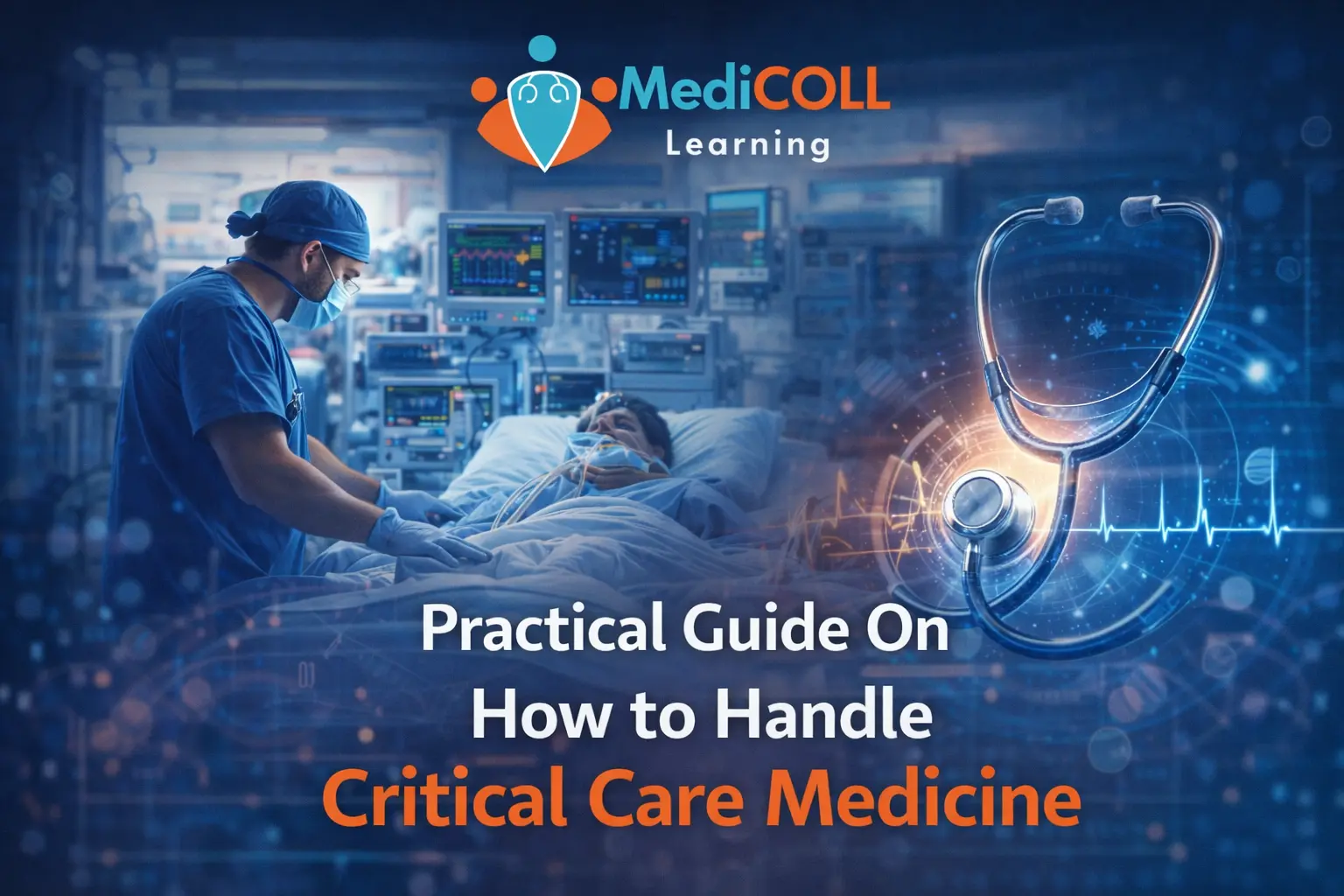
Managing a critically ill patient requires making informed clinical decisions, quick thinking and a structured critical care management guide. A patient's conditions can worsen by each second, so a physician needs to be prompt in their decision. Critical care medicine requires continuous monitoring, timely reassessment and the ability to prioritize interventions under tense pressure.
Airway stabilization, circulatory support and early identification of the risk is the central to patient survival. Errors in critical care can arise from delayed recognition or lack of systematic assessment. A structured critical care management guide supports early recognition of the clinical deterioration. This in turn reduces complications and significantly improves patient outcomes.
Critical Care medicine focuses on the management of patients with acute and life threatening conditions that require 24 hours monitoring and life support measures. These patients are managed in the Intensive Care Unit (ICU) where critical care medicine for ICU patient management requires multidisciplinary coordination.
Critical Care medicine involves stabilizing airway, breathing and circulation while simultaneously identifying the underlying cause of the decline in condition. Medical conditions commonly encountered include septic shock, severe trauma, cardiac emergencies and organ dysfunction.
This specialty integrates rapid decision making with continuous reassessment of the patient status. Management in ICUs are rarely static,as the continuous adjustment is required until the patient is stabilized and showing sustained improvement. Ventilator settings, fluid balance, vasopressor support and laboratory parameters often require frequent adjustments.
Critical care medicine for ICU patient management calls for anticipation of complications. Preventing secondary infection, pressure injuries, electrolyte imbalance and progression of organ failure is important as treating the primary cause. In simple words, critical care medicine is the combination of structured vigilance with timely interventions.
The basis of critical care management includes mastering the rapid assessment, stabilization and 24 hours monitoring of patients with life threatening injuries or illness in ICUs. Clarity of priorities is essential for the medical professionals entering the ICU. Critical care management begins with identifying the immediate threats to life and addressing them in a systematic manner.
Critical care handling guide for junior doctors emphasizes stepwise assessment, clear documentation and timely communication with seniors. Escalation of care should not be delayed when the patient shows signs of warning.
● Assessment and Monitoring: Initial evaluation of critically ill patients using clinical examination and tools like early warning scores.
● Respiratory support: Understanding mechanical ventilation modes, ventilator settings, trouble shooting, oxygen therapy and management of acute respiratory failure.
● Cardiovascular Care: Hemodynamic monitoring including arterial lines and central venous pressure and management of shock
● Emergency Interventions: Cardiopulmonary resuscitation, airway management and immediate stabilization measures.
● System Support: Management of organ failure, neurological emergencies and sedation or analgesics
● Foundational Knowledge: Applying anatomy, physiology and pharmacology to stabilize the patient and prevent any further complications.
A practical approach in critical care medicine starts with critical thinking. Knowing how to handle Critical Care Patients Step by Step prevents avoidable errors. It focuses on immediate management of life threatening illness through a multidisciplinary team, utilizing advanced monitoring and support in the intensive care unit.
The step is immediate assessment of airway, breathing and circulation. If instability is identified, stabilization takes priority over detailed investigation. Simultaneously, vital parameters must be continuously monitored.
Once the patient is stabilized, the focus shifts to identify the root cause of the condition. Laboratory tests, imaging and bedside assessments should be ordered in a targeted manner. Reassessment is crucial as clinical status of a patient can change suddenly.
The important elements of this approach includes systematic clinical assessment, procedural competence, clear documentation and ethical decision making such as family counselling and prognosis estimation.
Critical Care Protocols and Procedures are standardized and evidence based guidelines used in intensive care units to manage patients with critical conditions.
This helps in streamlining care for conditions like trauma and respiratory failure by providing step by step instructions of evaluation, treatment, monitoring and preventing further complications.
While individualized judgment remains important, the structured protocols ensure that the essential steps are not missed during high pressure situations.
The protocols and procedures aid in maintaining consistency, high quality care and reduce clinical errors. Common ICUs protocol include management of sepsis, mechanical ventilator, trauma, nutritional support and infections prevention strategies.
Procedural competence, documentation, and clear communication are integral components of effective protocols based care. The quality ICU practice is also guided by core principles of patient centered care.
The seven components of care are Compassion, Communication, Consideration, Comfort, Carefulness, Consistency, and Closure which reinforces the importance of ethical practice even in acute settings.
Critical Care Protocols and Procedures are often adopted to local hospital resources and patient demographics to optimize outcomes while reducing mortality. However, protocols should not be replaced with clinical reasoning.
They provide direction, but patient-specific factors must guide the final decisions. A balanced approach combining standardized pathways with individualized care improves safety and outcomes in the intensive care unit.
Effective critical care requires balance between protocol driven management and individualized decision making. While standardized pathways improve safety, patient outcome depends ultimately on continuous assessment and timely interventions.
At MediColl, emphasis is placed on structured clinical reasoning supported by practical experience. An ICU patient management guide should not function as a rigid check list but a framework that supports informed decision making. Each patient comes with different signs and symptoms, even when the diagnosis seems similar.
Critical care teams must prioritize communication, early recognition of instability and coordinated multidisciplinary involvement. Discussion with the family of the patient and ethical consideration are equally important in complex medical cases. An ICU patient management guide should emphasize not only focus on procedures and monitoring but also on clinical judgements.
Avoiding delays, preventing complications and anticipating the worsening symptoms remain crucial responsibilities of intensive care unit practice. Sustained outcomes depend on vigilant monitoring, appropriate escalation and careful follow up planning.
© Copyrights Medicoll All rights reserved.